


What's Happening?
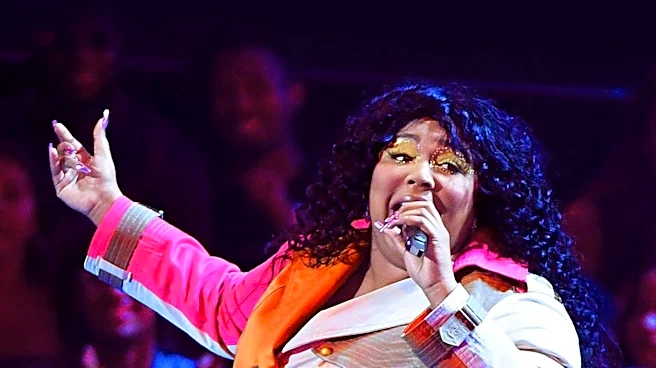
Lizzo, born Melissa Viviane Jefferson, has been openly discussing the aftermath of multiple lawsuits filed against her and her production company in 2023. These lawsuits included allegations of sexual harassment, a hostile work environment, and weight-shaming.
While some of these claims have since been dismissed, the singer acknowledges that the legal battles have significantly impacted her public image and personal well-being. During a discussion with Willie Geist at Books of Wonder in New York, Lizzo expressed her ongoing struggle with the public narrative surrounding these events, stating that she cannot escape the controversy despite legal victories. She emphasized her desire to control her own identity amidst a public perception that she feels is largely dictated by external forces. Lizzo is focusing on positive projects, such as her new children's book, 'Lil Lizzo Meets Sasha B. Flootin,' as a way to reshape her narrative and highlight her accomplishments.
Why It's Important?
The ongoing public discourse surrounding Lizzo's 2023 lawsuits highlights the significant challenges public figures face in managing their image and career in the wake of legal accusations, even when those accusations are dismissed. This situation underscores the power of public opinion and media narratives, which can persist and influence perception long after legal resolutions. For artists and public figures, the ability to control one's narrative becomes crucial, as negative publicity can have lasting effects on endorsements, fan engagement, and overall career trajectory. Lizzo's strategy of focusing on positive projects, like her children's book, demonstrates an attempt to pivot from controversy and re-engage with her audience on her own terms. This approach could serve as a model for other public figures navigating similar situations, emphasizing proactive image management over reactive legal battles in the court of public opinion. The case also brings to light the complexities of workplace allegations in the entertainment industry and the scrutiny that comes with celebrity status.
What's Next?
Lizzo plans to continue focusing on positive endeavors, such as promoting her new children's book, 'Lil Lizzo Meets Sasha B. Flootin,' which aims to inspire confidence in young readers. This initiative is part of her broader strategy to reshape her public image and shift the narrative away from the 2023 lawsuits. She intends to highlight her achievements and projects she is proud of, rather than engaging in prolonged media battles over the allegations. While one lawsuit was completely dismissed, another remains active, indicating that legal proceedings may still be ongoing in some capacity. Her continued public discussions about the impact of these lawsuits suggest an ongoing effort to process and address the personal and professional fallout. The success of her new projects and her ability to effectively steer public perception will be key indicators of her future trajectory in the entertainment industry.
Beyond the Headlines
Beyond the immediate legal and public relations challenges, Lizzo's experience sheds light on the broader societal implications of 'cancel culture' and the lasting impact of allegations, regardless of their legal outcome. The situation raises questions about the fairness of public judgment versus legal due process, and how quickly reputations can be tarnished in the digital age. It also highlights the intense pressure on public figures to maintain an impeccable image, and the personal toll that constant scrutiny can take. Lizzo's reflection on making 'peace with the fact that there’s a version of Lizzo that exists now that the world controls' speaks to a deeper struggle with identity and autonomy in the public eye. This scenario could influence how future allegations against celebrities are handled, potentially leading to more proactive communication strategies or increased emphasis on legal clarity to mitigate public fallout. It also underscores the ethical responsibility of media outlets and the public in forming opinions based on initial claims versus verified facts.