







What's Happening?
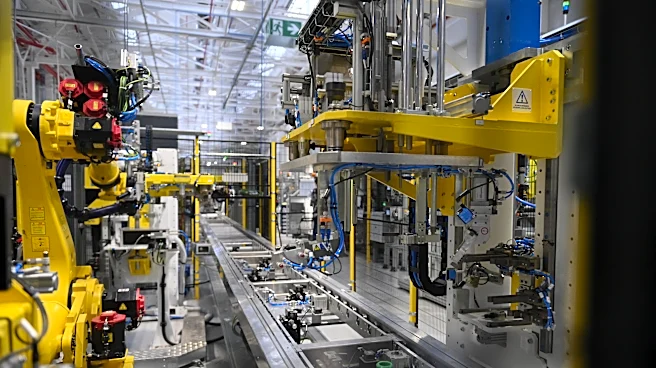
U.S. manufacturing activity experienced a slowdown in June, following a four-year high in May, as reported by the Institute for Supply Management (ISM). The manufacturing Purchasing Managers' Index (PMI) decreased to 53.3 from 54.0, indicating continued
expansion but at a slower pace. This deceleration is attributed to the fading impact of businesses front-loading orders to avoid shortages and price hikes due to the Middle East conflict. Despite the slowdown, the sector remains buoyed by a surge in artificial intelligence investments. The ISM survey highlighted that 64% of manufacturers are hiring, up from 50% in May, and noted a decrease in concerns over the U.S.-led war with Iran and pricing volatility. However, input prices remain high, with continued price increases for goods like semiconductors and electronics.
Why It's Important?
The slowdown in manufacturing activity, while still indicating growth, reflects broader economic challenges, including supply chain disruptions and pricing pressures. The elevated input prices, driven by AI investments and geopolitical tensions, pose a risk of inflationary pressures spilling over into the broader economy. This situation could prompt the Federal Reserve to consider raising interest rates to manage inflation. The manufacturing sector's health is crucial as it accounts for a significant portion of the U.S. economy, and its performance can influence employment rates and economic stability. The ongoing AI investment boom suggests a shift in manufacturing priorities, potentially reshaping the industry's landscape and labor market dynamics.
What's Next?
The Federal Reserve is expected to monitor inflation closely, with financial markets anticipating potential interest rate hikes to curb inflationary pressures. The manufacturing sector may continue to face challenges from high input costs and geopolitical uncertainties, impacting profitability and pricing strategies. The labor market could see moderate improvements, with expectations of increased manufacturing employment in upcoming reports. Stakeholders, including policymakers and industry leaders, will likely focus on balancing growth with inflation control, while manufacturers may need to adapt to evolving technological and geopolitical landscapes.