






What's Happening?
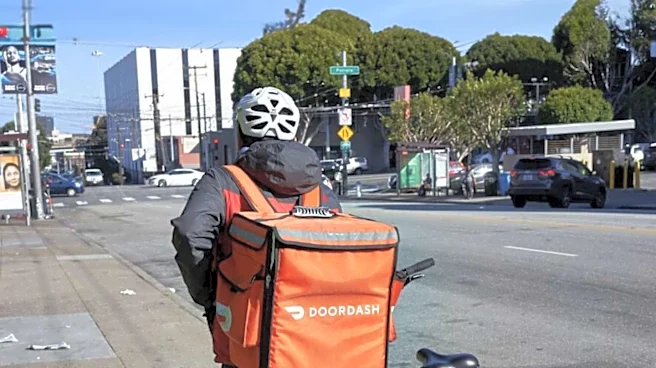
Instacart, the San Francisco-based grocery-delivery company, is reportedly exploring a sale and has engaged in preliminary discussions with DoorDash. The company, which trades as Maplebear Inc., has enlisted an investment bank to advise on the potential
transaction. This development follows earlier reports that Instacart had also approached Uber Technologies, though those talks have since concluded without a deal. The current discussions with DoorDash are described as early, and there is no guarantee that a deal will be reached. Instacart's shares saw a significant rise of 9.2% to $56.44 on Friday following the news, while DoorDash and Uber experienced slight declines. Instacart's market value was approximately $12 billion before the report, increasing to over $13 billion after the rally.
Why It's Important?
A potential acquisition of Instacart by DoorDash would significantly reshape the U.S. delivery market. DoorDash, already a major player in food and convenience delivery, would gain a dominant position in on-demand grocery delivery by integrating Instacart's extensive retailer relationships, advertising business, and shopper network. This consolidation could lead to increased market power for DoorDash, potentially affecting competition, pricing, and the terms offered to grocers and gig workers. For Instacart, a sale could provide the necessary resources and reach to compete more effectively against large grocers building their own delivery operations and against tech giants like Amazon, which are expanding into rapid grocery delivery. The move also reflects a changing antitrust climate under the current administration, which has shown a greater willingness to approve large deals compared to its predecessor.
What's Next?
The preliminary talks between Instacart and DoorDash will likely continue, with both companies assessing the strategic and financial implications of a potential merger. Regulatory scrutiny will be a significant factor, as a combination of these two major delivery platforms could raise antitrust concerns, particularly regarding their direct competition for grocery orders, retail partners, and gig workers. Regulators may examine whether a merged entity could dictate terms to grocers or consumers, potentially requiring divestitures of certain business segments. The outcome of these discussions will also impact thousands of California gig workers, as a combined entity would place more of the workforce under a single company's app, potentially affecting their working conditions and compensation under Proposition 22.
Beyond the Headlines
The exploration of a sale by Instacart highlights the intense competitive pressures and evolving landscape within the on-demand delivery sector. Instacart's slowing revenue growth, despite its profitability, indicates the challenges of maintaining market share against both established retailers and larger, diversified platforms. The potential merger with DoorDash signifies a strategic move towards creating a more comprehensive 'mall in your pocket' experience, where consumers can access a wider range of goods beyond just restaurant meals. This consolidation could accelerate the trend of delivery platforms becoming essential infrastructure for local commerce, blurring the lines between traditional retail and digital marketplaces. The ethical and legal implications surrounding gig worker classification and market dominance will remain central to public and regulatory discourse.