









What's Happening?
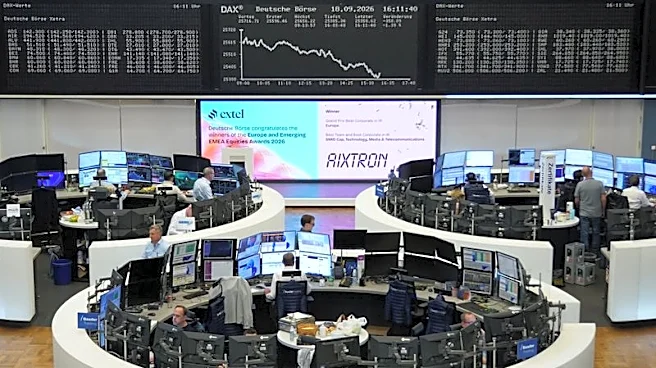
Morgan Stanley's senior portfolio manager, Andrew Slimmon, is advising investors to diversify their portfolios by looking beyond U.S. markets and investing in Japan and Europe. According to Slimmon, these markets, particularly the banking and defense
sectors, are showing improved earnings estimates and strong performance. He notes that while these stock markets have historically been perceived to lag the U.S. due to earnings often frustrating pricing expectations, this trend is changing. Slimmon highlights that companies in Japan and Europe are increasingly revising up their earnings estimates, which he believes is a key driver for the positive performance observed in the Japanese stock market and across Europe. He specifically points to the strong performance of banks and the defense industry in Europe. Slimmon remains optimistic about the market's potential, anticipating a significant rally as investors recognize the robust earnings story unfolding in these regions. He also addresses concerns about narrow breadth in U.S. markets, where a few mega-cap stocks drive indices, stating that this is not always detrimental to equities.
Why It's Important?
This recommendation from a prominent financial institution like Morgan Stanley carries significant weight for U.S. investors and the broader financial landscape. It suggests a potential shift in investment strategy, encouraging a move away from an over-reliance on the U.S. market, which has seen substantial growth in recent years. Diversifying into Japanese and European markets could offer U.S. investors opportunities for growth and risk mitigation, especially if the U.S. market experiences a slowdown or increased volatility. The focus on banking and defense sectors in Europe indicates a belief in their resilience and growth potential, possibly driven by geopolitical factors and economic recovery in the region. For U.S. companies, increased investment in these international markets could lead to greater competition or collaboration opportunities. Furthermore, if a significant number of U.S. investors follow this advice, it could influence capital flows, potentially strengthening these international markets and impacting the relative performance of U.S. equities. The emphasis on rising earnings estimates as a key driver underscores the importance of fundamental analysis in investment decisions.
What's Next?
Following Morgan Stanley's advice, U.S. investors may begin to re-evaluate their portfolio allocations, potentially increasing their exposure to Japanese and European equities. This could lead to a gradual shift in investment trends, with more capital flowing into these international markets. Financial advisors and wealth managers might incorporate these recommendations into their client strategies, leading to a broader adoption of diversification into these regions. Companies in the banking and defense sectors in Japan and Europe could see increased investor interest and potentially higher valuations. Market analysts will likely monitor earnings revisions in these regions closely to confirm the sustained growth trajectory that Morgan Stanley anticipates. The performance of these markets relative to the U.S. will be a key indicator of the success of this diversification strategy. Additionally, central banks and policymakers in these regions will be watching these investment trends, as they could influence economic stability and growth. The ongoing assessment of global economic conditions and geopolitical developments will continue to shape the attractiveness of these investment destinations.
Beyond the Headlines
The recommendation to diversify into Japan and Europe reflects a deeper narrative about the evolving global economic landscape and the search for sustainable growth beyond traditionally dominant markets. It suggests a potential rebalancing of global financial power, where other developed economies are increasingly seen as viable and attractive investment destinations. This shift could be driven by various factors, including demographic changes, technological advancements, and geopolitical realignments that are creating new opportunities and risks. The emphasis on specific sectors like banking and defense also hints at underlying structural changes; for instance, increased defense spending in Europe could be a response to geopolitical tensions, while a robust banking sector might indicate broader economic health and stability. For U.S. investors, this advice challenges the conventional wisdom of home-country bias and encourages a more globally integrated investment perspective. It underscores the interconnectedness of global markets and the need for a nuanced understanding of international economic dynamics to achieve long-term financial success. This could also lead to a greater focus on international economic data and policy decisions among U.S. financial media and investors.