



What's Happening?
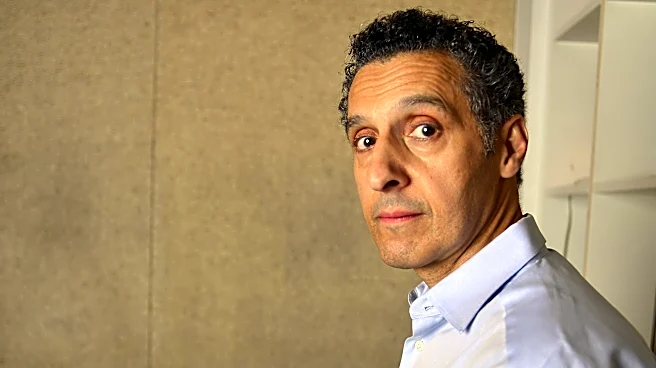
Actor John Turturro, known for his role as Agent Seymour Simmons in four 'Transformers' films, recently spoke at the Marrakech International Film Festival about the creative and financial aspects of participating in major Hollywood franchises. Turturro explained
that while blockbusters offer significant financial benefits, they require a different creative approach compared to his independent work. He likened the process to a 'quick sketch' rather than a 'fine painting,' emphasizing the challenge of adapting to this style. Turturro also shared advice he received from Robert Redford about working 'both sides of the street' – balancing lucrative studio projects with more personal, creative endeavors. He highlighted that the substantial paychecks from films like 'Transformers' enable him to fund his passion projects, preventing a loss of 'inner life' that can occur from solely focusing on commercial work. His children also played a role in his decision to join the 'Transformers' franchise, encouraging him after he had previously turned down other big-budget offers.
Why It's Important?
Turturro's insights shed light on the broader dynamics within the U.S. film industry, particularly the tension between artistic integrity and commercial viability for actors. His comments underscore how major franchises, while often criticized for their lack of artistic depth, provide the financial foundation for many actors to pursue more creatively fulfilling, independent projects. This creates a symbiotic relationship where the commercial success of blockbusters indirectly supports the independent film scene. For aspiring actors and filmmakers, Turturro's perspective offers a realistic view of career management in Hollywood, suggesting that strategic engagement with high-paying commercial roles can be a means to an end for artistic freedom. It also highlights the personal and creative sacrifices actors might make when committing to long-running franchises, and the importance of maintaining a balance to avoid creative burnout or a perceived 'loss of inner life.'
What's Next?
As the film industry continues to evolve with a strong emphasis on franchise filmmaking and streaming content, discussions around creative freedom versus commercial demands are likely to persist. Actors may increasingly adopt strategies similar to Turturro's, leveraging high-profile roles to finance diverse portfolios of work. The success of independent films, often supported by actors' earnings from blockbusters, could influence future investment in non-franchise cinema. For audiences, this dynamic means a continued stream of both large-scale commercial entertainment and more niche, artistically driven projects. The industry may also see more actors openly discussing their career choices and the motivations behind them, potentially fostering greater transparency about the economics of Hollywood.
Beyond the Headlines
Turturro's analogy of commercial movies as an 'electrical job' and his independent work as 'plumbing' speaks to a deeper cultural and artistic struggle within the entertainment industry. It raises questions about the value placed on different forms of artistic expression and the economic realities that shape creative output. The 'Transformers' franchise, while a commercial juggernaut, represents a specific type of filmmaking that prioritizes spectacle and broad appeal. In contrast, his independent projects, like 'The Only Living Pickpocket in New York,' often delve into more nuanced storytelling and character development. This dichotomy reflects a larger societal debate about mass culture versus high art, and how artists navigate these often-conflicting worlds. The financial leverage gained from blockbusters allows actors to challenge the commercial imperative, fostering a more diverse and creatively rich cinematic landscape.