




What's Happening?
African leaders have launched the $5 billion Africa Energy Bank in Abuja, aiming to address an estimated $200 billion energy financing gap left by Western commercial lenders withdrawing from oil and gas. This new institution, backed by the African Export-Import
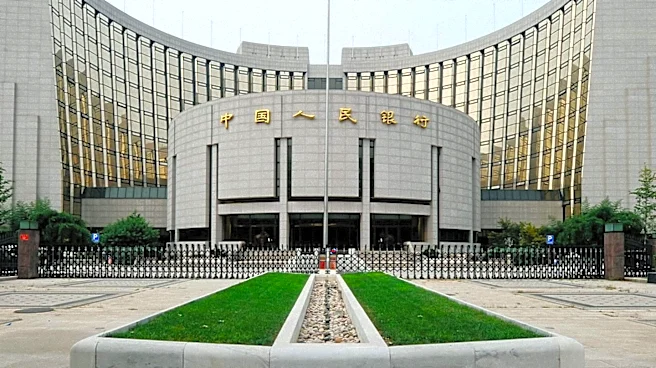
Bank (Afreximbank) and the African Petroleum Producers’ Organisation, is designed to support Africa's vast hydrocarbon reserves and combat energy poverty. Proponents of the Africa Energy Bank justify its creation by citing China's state-backed policy banks as a model. However, critics argue that Africa is attempting to replicate China's financial architecture without first establishing the foundational pillars that enabled China's success, such as earned capital, bundled planning, skilled workforce development, and strict reciprocity in credit allocation.
Why It's Important?
The establishment of the Africa Energy Bank reflects a critical need for energy financing on the continent, particularly as traditional Western sources retreat from fossil fuel investments. This initiative could significantly impact Africa's energy security and economic development, potentially unlocking its hydrocarbon potential. However, the comparison to China's model highlights a crucial debate about development strategies. If Africa fails to build the underlying industrial systems, workforce skills, and disciplined fiscal channels that underpinned China's policy banks, the new institution might not achieve its intended impact. This could lead to inefficient capital allocation, increased external debt, and a perpetuation of extractive economic models without fostering broader industrialization and economic sovereignty.
What's Next?
The Africa Energy Bank is slated for a lending rollout in 2027, with initial paid-in capital already committed. The effectiveness of this new bank will depend on whether African nations can implement the foundational pillars that made China's policy banks successful. This includes developing robust industrial systems, fostering a skilled workforce, and ensuring that credit is paired with comprehensive planning and strict performance requirements. Without these elements, the bank risks becoming another institution that primarily finances raw material extraction, leaving Africa vulnerable to currency and trade shocks. The debate over whether to prioritize bank creation or systemic development will continue to shape Africa's financial architecture and its path to economic sovereignty.
Beyond the Headlines
The creation of the Africa Energy Bank raises deeper questions about development paradigms and the transferability of economic models. While the intent to address energy poverty and finance critical infrastructure is clear, the critique suggests that simply replicating institutional structures without understanding the underlying sequence of development can be counterproductive. This situation highlights the ethical and practical challenges of development finance, particularly in regions with complex economic and political landscapes. It also underscores the importance of internal capacity building, strategic planning, and disciplined execution over merely establishing new financial institutions. The long-term implications could involve a re-evaluation of Africa's approach to development, emphasizing foundational economic reforms alongside financial initiatives.