






What's Happening?
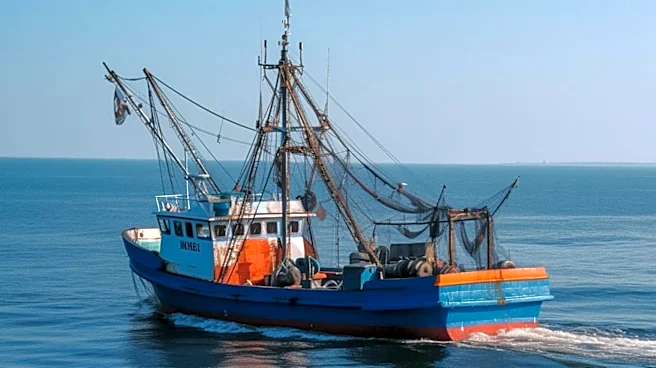
The renowned 53-foot Sportsman fishing boat, originally named 'Anxious' and built in Manteo, North Carolina, in 1984, is returning to its home shores. This vessel, celebrated for its craftsmanship and fishing prowess, has had a storied four-decade history
under various names including 'Black Jack,' 'Who Dat,' 'Petrel,' and 'Redemption.' Built by a team including Omie Tillett and Tom Daughtry, the boat quickly gained a reputation for its distinctive design and speed. Over the years, it has been owned by several notable figures, including shipping mogul Don Liverman and Roy 'Chappy' Chapman, a successful car dealership owner and thoroughbred enthusiast. Most recently, under the name 'Petrel,' it was a cherished vessel for Harry 'Uncle Harry' Johnson, a pioneer in South Carolina's billfish fishery and conservation. After Johnson's passing, Captain Thomas Wynne, who had owned the boat since 2015, sold it to Capt. Wes McAfee and Lee Ravenel, who renamed it 'Redemption.' Now, the boat is heading back to North Carolina, where its new owners plan to restore its original name, 'Anxious,' marking a full-circle journey for the iconic vessel.
Why It's Important?
The return of the 53-foot Sportsman to North Carolina signifies more than just a boat changing hands; it represents the enduring legacy of American boatbuilding and sport fishing culture. This vessel is a testament to the skill and dedication of North Carolina craftsmen, particularly those from Dare County, who established a reputation for producing some of the finest sportfishing boats. Its history reflects the evolution of offshore fishing, from early tournaments to the growing emphasis on conservation, as exemplified by Harry Johnson's decision to release blue marlin. The boat's journey highlights the deep personal connections and traditions forged around such vessels, impacting families and communities involved in the sport. For the U.S. marine industry, it underscores the value placed on classic, well-built boats that maintain their appeal and functionality for decades, influencing design and construction standards. The boat's continued operation and restoration also contribute to the preservation of maritime heritage and the sportfishing economy in coastal regions.
What's Next?
The 53-foot Sportsman, now once again named 'Anxious,' is embarking on a new chapter in North Carolina. Its new owners are expected to continue its legacy of sport fishing, potentially participating in tournaments and charters along the Atlantic Coast. The return to its birthplace may also inspire renewed interest in the history of Sportsman Boatworks and the craftsmen who built it, potentially leading to further documentation or recognition of their contributions. The boat's continued presence in the sportfishing community will likely maintain its status as a revered vessel, influencing new generations of anglers and boat enthusiasts. Its story may also serve as a case study for the longevity and enduring value of classic American-made vessels, potentially encouraging preservation efforts for other historic boats. The vessel's journey back home is anticipated to be met with enthusiasm by those familiar with its storied past and its significance in the sportfishing world.
Beyond the Headlines
The narrative of the 53-foot Sportsman extends beyond its physical attributes, delving into the cultural and emotional fabric of the sportfishing community. The boat is described as having a 'soul,' a sentiment that reflects the deep personal attachments and memories created aboard such vessels. It embodies the intangible value of craftsmanship, where a boat becomes more than just a machine but a living entity that witnesses generations of life events, from childhood fishing trips to the scattering of ashes. This emotional connection highlights a broader cultural appreciation for heritage and tradition in American leisure activities. Legally, the continuous ownership and transfer of such a valuable asset over decades underscore the importance of maritime property law and the mechanisms for preserving historical vessels. Ethically, the story touches upon conservation efforts within sport fishing, as exemplified by Harry Johnson's decision to prioritize catch-and-release, influencing sustainable practices in the industry. The boat's enduring appeal also speaks to a timeless aesthetic and functional design that transcends fleeting trends, offering insights into what makes a product truly iconic and lasting.