






What's Happening?
Yinson GreenTech (YGT), through its marine electrification business marinEV, has signed a Memorandum of Understanding (MoU) with Langkawi Port Sdn Bhd (LPSB) to establish the Langkawi Electric Ferry Project. This collaboration aims to introduce Malaysia's
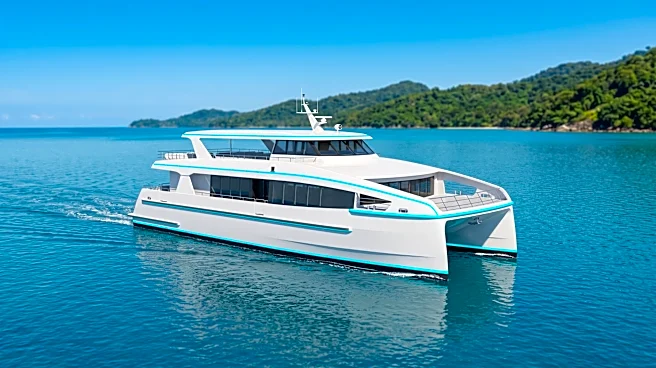
first commercial, open-sea, point-to-point, fully electric passenger ferry service. The project will involve deploying purpose-built electric passenger ferries to operate between Kuah, Langkawi, and Kuala Perlis. These ferries will be supported by shore-based charging infrastructure and integrated marine technologies. YGT will provide the vessels under a charter arrangement, LPSB will operate the service, and Tenaga Nasional Bhd will develop the necessary power and charging infrastructure. The vessels will utilize marinEV’s Hydroferry platform, featuring electric propulsion, onboard energy storage, integrated digital technologies, and autonomous and remote-operation capabilities developed by Zeabuz.
Why It's Important?
This initiative marks a significant step towards sustainable maritime transport in Malaysia, potentially setting a precedent for broader adoption of electric vessels in the region. By introducing a fully electric ferry service, the project aims to reduce carbon emissions and reliance on fossil fuels in passenger transportation, aligning with global efforts to combat climate change. The collaboration demonstrates how vessel electrification, shore charging, and digital technologies can be integrated into daily passenger transport operations, offering a practical and scalable solution. This development could stimulate economic growth in the maritime sector by fostering innovation in electric vessel technology and infrastructure. Furthermore, it supports local communities and tourism by providing cleaner and more reliable maritime connectivity, enhancing the appeal of Langkawi as an eco-friendly destination. The project's success could encourage other countries in Southeast Asia to explore similar electric maritime solutions, contributing to regional environmental goals.
What's Next?
Following the signing of the MoU, the next steps will involve the detailed development and implementation of the Langkawi Electric Ferry Project. YGT will focus on providing the electric vessels, while LPSB will prepare for the operational aspects of the service. Tenaga Nasional Bhd will proceed with developing the power and charging infrastructure required to support the electric ferries. MarinEV managing director Jan-Viggo Johansen indicated that the focus will be on developing a practical and scalable solution, drawing on experience from electric vessel operations in Singapore. This suggests a phased approach, with initial operations providing valuable data and experience for wider adoption. The project is expected to complement existing connectivity between Langkawi and mainland Malaysia, and its progress will be closely watched as a model for future maritime electrification initiatives in the country and potentially the broader region.
Beyond the Headlines
The Langkawi Electric Ferry Project extends beyond merely introducing electric vessels; it represents a broader shift towards integrating advanced digital and autonomous technologies into maritime transport. The incorporation of marinEV’s integrated digital technologies and Zeabuz-developed autonomous and remote-operation capabilities suggests a future where maritime travel is not only electric but also highly automated and efficient. This could lead to significant operational cost reductions, improved safety, and enhanced passenger experiences. The project also highlights the importance of public-private partnerships in driving sustainable innovation, with YGT, LPSB, and Tenaga Nasional Bhd each playing a crucial role. Ethically, this initiative underscores a commitment to environmental stewardship and sustainable tourism, positioning Langkawi as a leader in green transportation. The long-term implications could include a complete overhaul of maritime logistics and passenger transport, fostering a new ecosystem of electric and autonomous marine solutions.