






What's Happening?
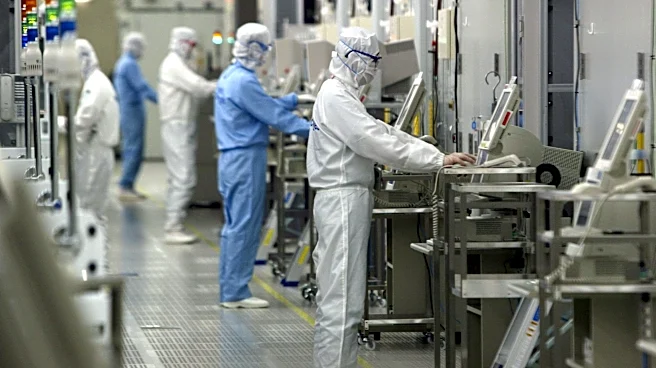
Taiwan's industrial production index surged by 29.8% year-on-year in October, reaching a record high of 151.3. This marks the 32nd consecutive month of growth, according to the Ministry of Economic Affairs. The significant increase is primarily attributed
to the robust development of artificial intelligence (AI) applications and the expanding capacity within the semiconductor supply chain. The manufacturing subindex, which constitutes 93.72% of the overall industrial production index, saw a 31.63% increase. Notably, the computer, electronic, and optical products industry experienced the largest growth, soaring by 130.57%, benefiting from strong demand for high-performance computing and AI applications, as well as increased testing demands for semiconductor manufacturing processes.
Why It's Important?
This record-breaking industrial production in Taiwan underscores the critical role the region plays in the global technology supply chain, particularly in semiconductors and AI. The sustained growth highlights the immense worldwide demand for advanced chips and AI-related hardware, which are foundational to numerous U.S. industries, including technology, defense, and automotive. For U.S. businesses, this robust production ensures a continued supply of essential components, though it also emphasizes the reliance on a concentrated manufacturing base. The strong performance in Taiwan's tech sector can influence global market dynamics, potentially impacting pricing and availability of electronic goods and advanced computing resources in the U.S. The continued expansion of AI applications suggests a long-term growth trajectory for the semiconductor industry, with implications for U.S. technological innovation and economic competitiveness.
What's Next?
The Ministry of Economic Affairs projects that Taiwan's manufacturing output will continue its strong growth momentum, with an estimated increase of 22.2% to 26% year-on-year for the current month. For the entire year, manufacturing output is predicted to rise by approximately 20%, which would represent the largest annual growth in 16 years. This sustained growth is expected to be driven by ongoing demand for AI and high-performance computing. However, the report also noted a decrease in output for traditional industries like chemical materials, fertilizers, automobiles, and auto parts due to weak demand, indicating a divergence in performance across different sectors. The continued expansion of the semiconductor and electronics industries will likely further solidify Taiwan's position as a global leader in advanced technology manufacturing.
Beyond the Headlines
The exceptional growth in Taiwan's industrial production, particularly in the semiconductor and AI sectors, reveals a deeper global economic shift towards digital transformation and advanced computing. This trend has significant implications for U.S. policy, particularly regarding supply chain resilience and technological independence. The concentration of advanced manufacturing in Taiwan, while currently beneficial for global supply, also presents potential vulnerabilities. This situation could further fuel U.S. efforts to incentivize domestic chip production and diversify its supply chains to mitigate geopolitical risks. The booming demand for AI also raises questions about future energy consumption and environmental impact, as the production and operation of advanced computing infrastructure are energy-intensive. This growth also highlights the increasing interconnectedness of global economies, where a single region's industrial performance can have ripple effects worldwide.