









What's Happening?
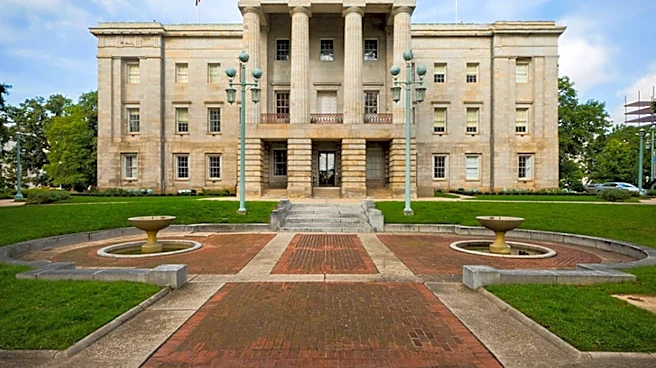
North Carolina is considering a legislative proposal, SB 257, which would impose a 6% tax on trading fees for prediction markets regulated by the Commodity Futures Trading Commission (CFTC). This proposal is part of the state's 2026 Appropriations Act,
which includes a $34 billion budget for the fiscal year starting July 1st. The bill acknowledges the CFTC's exclusive jurisdiction over prediction markets, setting a precedent by potentially making CFTC-regulated platforms legal within North Carolina. If passed, the tax would be effective from January 1st, 2027. The proposal also seeks to increase the tax rate on licensed sportsbooks from 18% to 23%. The bill is expected to pass both the House and Senate before the holiday weekend and will require the signature of Governor Josh Stein to become law.
Why It's Important?
The proposal marks a significant shift in how prediction markets are regulated at the state level, potentially setting a model for other states to follow. By recognizing CFTC-regulated prediction markets as lawful, North Carolina could pave the way for broader acceptance and integration of these markets within the U.S. financial system. This could benefit platforms like Kalshi, which operate under CFTC regulation, by providing a legal framework that supports their operations. However, the proposal also highlights the ongoing tension between state and federal regulations, as other states and tribal gaming authorities continue to challenge the legality of prediction markets. The outcome of this legislation could influence future legal battles and regulatory approaches across the country.
What's Next?
If SB 257 is approved, it could lead to increased interest and investment in prediction markets within North Carolina and potentially other states. The legislation may also prompt other states to consider similar regulatory frameworks, especially if the model proves successful in balancing state revenue generation with federal oversight. However, legal challenges from other states and tribal authorities are likely to continue, potentially escalating to the U.S. Supreme Court. The decision in North Carolina could serve as a test case for the broader acceptance and regulation of prediction markets in the U.S.