






What's Happening?
General Motors (GM) CEO Mary Barra confirmed during a 2026 third-quarter earnings call that the company plans to reintroduce new hybrid and plug-in hybrid vehicles starting as early as 2027. This strategic shift comes as GM moves away from its previous
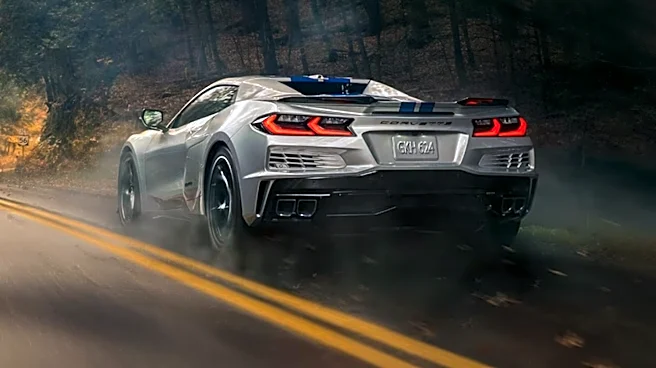
exclusive focus on fully electric vehicles (EVs) due to slowing EV sales and growing consumer demand for hybrids. The new hybrid offerings will target high-demand segments, including the Chevrolet Silverado 1500, GMC Sierra 1500, and Chevrolet Equinox. Notably, there are no plans for hybrid sedans like the Malibu. This decision marks a significant change in GM's electrification strategy, which previously involved discontinuing models like the Chevrolet Bolt EV in favor of larger, more expensive fully electric trucks and SUVs. The company's only current hybrid is the Chevrolet Corvette E-Ray, with plug-in hybrids sold exclusively in China.
Why It's Important?
This strategic pivot by General Motors reflects a broader industry adjustment to evolving consumer preferences and market realities in the U.S. automotive sector. The reintroduction of hybrids and plug-in hybrids by a major manufacturer like GM indicates a recognition that a significant portion of the market is not yet ready for a full transition to EVs, often due to factors like range anxiety, charging infrastructure concerns, and upfront costs. This move could benefit consumers by offering more diverse and potentially more affordable electrified vehicle options, bridging the gap between traditional internal combustion engines and full EVs. For GM, it represents an opportunity to recapture market share in the hybrid segment, which is currently dominated by competitors like Toyota, and to mitigate financial risks associated with slower-than-anticipated EV adoption. The decision also highlights the impact of external factors, such as the removal of federal EV tax incentives and high gasoline prices, on consumer purchasing decisions.
What's Next?
GM's reintroduction of hybrid and plug-in hybrid vehicles is expected to begin in 2027, with a focus on popular truck and SUV segments. This move will likely intensify competition in the hybrid market, potentially prompting other automakers like Ford Motor Co. and Stellantis to accelerate their own hybrid offerings. The company's long-term commitment to electrifying 50 percent of its fleet by 2030 and 100 percent of its passenger and light-duty vehicles by 2035 remains in place, suggesting that hybrids are viewed as a transitional technology. The success of this strategy will depend on consumer reception and GM's ability to effectively market these new hybrid options. Industry observers will be closely watching how this shift impacts GM's overall sales figures and its progress toward its long-term electrification goals.
Beyond the Headlines
GM's decision to embrace hybrids again underscores a critical lesson for the automotive industry: market transitions are rarely linear. The initial aggressive push towards an all-EV future, while visionary, may have overlooked the practical needs and readiness of a significant portion of the consumer base. This pivot suggests a more pragmatic approach, acknowledging that a multi-pronged strategy, including hybrids, is necessary to achieve broader electrification goals. It also highlights the influence of economic factors and government policies, such as tax incentives, on technological adoption. The re-emphasis on hybrids could lead to a resurgence in research and development for these technologies, potentially leading to more efficient and advanced hybrid systems. This shift could also influence infrastructure development, as the need for widespread EV charging might be temporarily lessened by the availability of vehicles that can run on both electricity and gasoline.