

What's Happening?
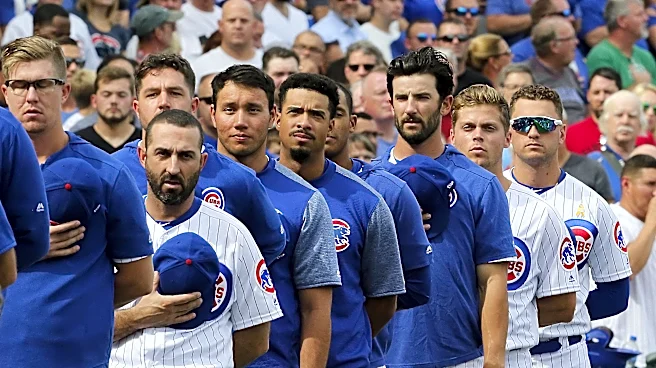
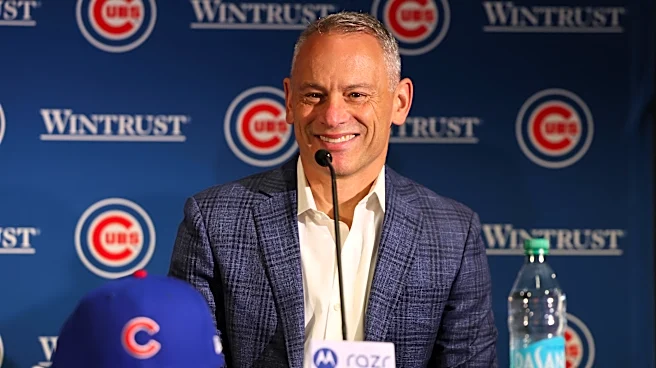
Chicago Cubs President Jed Hoyer is under significant pressure this offseason, particularly concerning the team's payroll and recurring bullpen problems. Despite having a substantial payroll, it is often deemed insufficient by fans, as Chairman Tom Ricketts
aims to avoid paying the luxury tax. Hoyer and Ricketts have a long-standing professional relationship, with Ricketts reportedly trusting Hoyer's decision-making, even in the face of consistent bullpen struggles. Hoyer himself acknowledged his poor performance in managing the bullpen this year. The Cubs are coming off a playoff season that ended in a wild-card series sweep, highlighting areas needing improvement, especially in pitching. Hoyer is tasked with replacing several key starters and rebuilding the bullpen, likely focusing on acquiring middle-aged, mid-range priced middle relievers. The team also needs to address the closer position after Daniel Palencia's injury-marred season.
Why It's Important?
This situation is important for the Chicago Cubs franchise and its fanbase, as it directly impacts the team's competitiveness and future performance. The delicate balance between fan expectations for a winning team and ownership's desire to avoid the luxury tax creates a challenging environment for Hoyer. His decisions this offseason regarding player acquisitions and roster construction will determine whether the Cubs can take the next step towards championship contention or continue to fall short. The recurring bullpen issues, if not adequately addressed, could undermine the performance of an otherwise strong lineup. Furthermore, the long-term relationship between Hoyer and Ricketts, and Ricketts' trust in Hoyer, suggests that Hoyer has the autonomy to make significant changes, but also bears the full weight of their outcomes. The financial constraints imposed by the luxury tax avoidance strategy could limit the Cubs' ability to compete for top-tier free agents, potentially forcing Hoyer to find value in less expensive options.
What's Next?
Jed Hoyer will be actively involved in the general managers' meetings in Las Vegas, which serve as the unofficial start of the MLB offseason. Despite potential interruptions due to an owners' lockout, rumors and preliminary discussions are expected to occur. Hoyer's immediate tasks include identifying and acquiring new starting pitchers, as the Cubs need to replace Matthew Boyd, Clay Holmes, Kevin Gausman, and Shota Imanaga, although Justin Steele and Cade Horton are expected to fill two of those spots eventually. Rebuilding the bullpen will be a priority, likely through the acquisition of middle relievers. The team also needs to decide on the starting catcher position, with Miguel Amaya as a potential candidate, and evaluate the outfield situation, considering whether to replace Ian Happ and Seiya Suzuki with younger players like Pedro Ramírez and Matt Shaw. These decisions will shape the Cubs' roster for the upcoming season and beyond.
Beyond the Headlines
The dynamic between Jed Hoyer and Chairman Tom Ricketts highlights a broader trend in professional sports where financial considerations often dictate team strategy. Ricketts' consistent avoidance of the luxury tax, while potentially sound business practice, can create tension with a fanbase eager for aggressive spending to secure top talent. This approach forces Hoyer to be creative and efficient in his roster construction, seeking out undervalued assets and developing internal talent. The long tenure of Hoyer and Ricketts together suggests a stable, albeit sometimes constrained, leadership structure. The success or failure of Hoyer's offseason moves will not only impact the Cubs' on-field performance but also influence fan engagement and the team's financial health. The challenge lies in maintaining a competitive team within these financial parameters, a task that requires shrewd decision-making and a deep understanding of the baseball market.