


What's Happening?
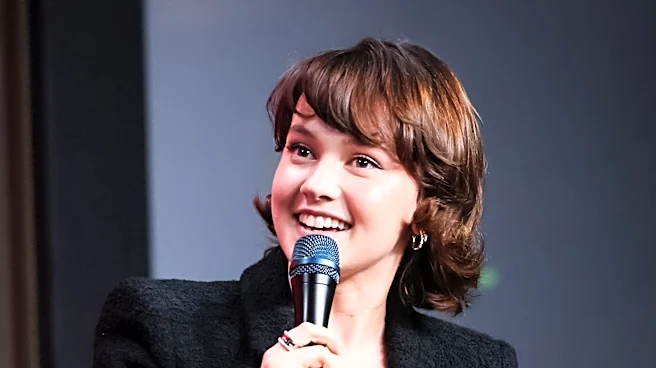
Olivia Cooke, the actor who portrays Alicent Hightower in HBO's 'House of the Dragon,' has publicly criticized the show's fanbase, describing it as 'steeped in misogyny' and 'racism.' In an interview with GQ Hype, Cooke revealed that she decided to leave
social media due to the 'ugliness' she encountered within the fandom. She noted that fan interpretations of the show often diverge significantly from what is presented on screen. Cooke, 32, made the decision to deactivate her social media accounts before the third season of 'House of the Dragon' began airing in June, citing concerns for her mental well-being. She described social media as 'not nourishing' and detrimental to one's self-image, stating it 'distorts your mental image of your body and yourself.' Despite her departure from online platforms, Cooke still faces criticism directly from fans in public. She recounted instances where individuals would ask for a photograph and then immediately follow up with 'vitriolic' insults about her character, such as 'I f***ing hate your character, by the way,' or 'Your character's a c***.' Cooke expressed gratitude for her job but highlighted the difficulty of receiving such insults while simply walking down the street.
Why It's Important?
This situation highlights a growing concern within the entertainment industry regarding fan culture and its impact on actors' mental health and public interactions. Olivia Cooke's experience underscores the darker side of passionate fandoms, where intense engagement can sometimes devolve into harassment and abuse, particularly targeting female actors or those portraying complex or antagonist characters. Her decision to leave social media reflects a broader trend among public figures seeking to protect their well-being from online negativity. This also brings to light the challenges actors face in separating their personal identity from their on-screen roles, as fans often conflate the two. The accusations of misogyny and racism within the 'House of the Dragon' fanbase point to deeper societal issues that can manifest in online communities, affecting how content is consumed and discussed. For HBO and the show's producers, such public criticism from a lead actor could prompt a re-evaluation of community management strategies and how they support their talent against online toxicity.
Beyond the Headlines
Olivia Cooke's experience extends beyond typical fan criticism, touching upon the ethical responsibilities of media platforms and content creators in fostering healthier online communities. The 'ugliness' she describes, characterized by misogyny and racism, reflects a broader societal issue where anonymity and perceived distance online can embolden individuals to engage in harmful behavior. This incident also raises questions about the nature of parasocial relationships, where fans develop intense, one-sided connections with characters and actors, sometimes leading to inappropriate or aggressive interactions when their expectations are not met or when they dislike a character's actions. The challenge for the entertainment industry is to balance fostering fan engagement, which is crucial for a show's success, with protecting the well-being of its talent. This situation may encourage more actors to speak out about similar experiences, potentially leading to industry-wide discussions on how to better support performers in the face of online harassment and how to cultivate more respectful fan environments.