
What's Happening?
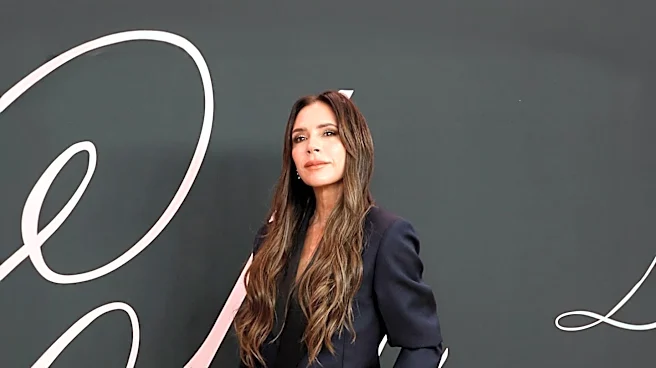
Victoria Beckham has launched a new line of red lipsticks, Rouge Victoria, featuring six shades from vibrant poppy to deep maroon. The collection debuted on the runway with models sporting statement lips paired with natural, dewy skin. Beckham expressed
that wearing red lipstick makes her feel empowered, strong, and confident, a sentiment she previously lacked. She was inspired by Mr. Valentino, who advised her that every woman should wear a red lip. The brand emphasizes the practicality of the new lipsticks, noting they are non-drying and long-lasting. Beckham also highlighted the genderless nature of her beauty products, stating that her husband uses them, and she would be flattered if individuals like Connor Storrie chose to wear Victoria Beckham Beauty.
Why It's Important?
This launch signifies a notable shift in the beauty industry towards inclusivity and gender fluidity, particularly within high-profile brands. Victoria Beckham's explicit statement about her products being 'genderless' challenges traditional marketing norms that often segment beauty products by gender. This approach can broaden the consumer base for luxury cosmetics, appealing to a wider demographic that values self-expression over conventional gendered beauty standards. The emphasis on empowerment and confidence associated with wearing red lipstick, coupled with its gender-neutral positioning, could influence other brands to adopt similar inclusive strategies. This move also reflects a growing societal trend where individuals, regardless of gender, are increasingly comfortable experimenting with makeup, potentially leading to a more diverse and accepting beauty landscape in the U.S. market.
What's Next?
The success of Victoria Beckham Beauty's genderless approach with the Rouge Victoria line could encourage other luxury and mainstream beauty brands to re-evaluate their marketing and product development strategies. We may see an increase in beauty campaigns that feature diverse models and explicitly promote products as gender-neutral. This could lead to a broader range of cosmetic products designed for universal appeal, moving away from gender-specific packaging and messaging. Additionally, the trend might influence beauty retailers to reorganize their displays, creating more inclusive sections rather than strictly gendered aisles. The conversation around makeup as a tool for self-expression, rather than solely for feminine enhancement, is likely to continue evolving, potentially fostering a more inclusive beauty culture.
Beyond the Headlines
The embrace of genderless beauty by a prominent figure like Victoria Beckham has deeper cultural implications. It challenges long-standing societal norms and stereotypes associated with makeup, particularly red lipstick, which has historically been a powerful symbol of femininity. By positioning her products as genderless, Beckham contributes to dismantling the idea that certain beauty items are exclusively for one gender. This move can empower individuals to explore their identity and express themselves authentically, free from the constraints of traditional gender roles. It also highlights a broader cultural shift towards fluidity and individuality, where personal choice and comfort are prioritized over conventional expectations. This could foster a more accepting and diverse society where beauty is seen as a universal form of self-expression.