





What's Happening?
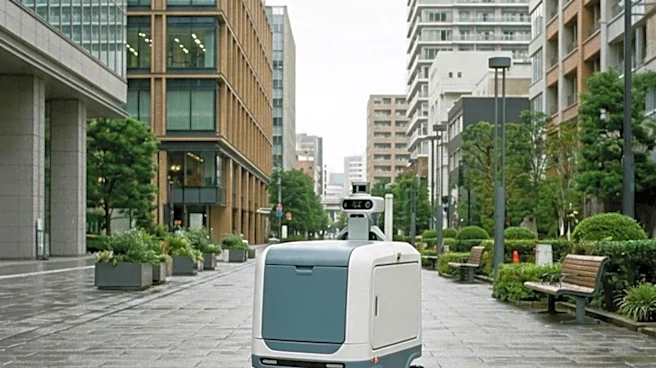
Serve Robotics, a company specializing in autonomous sidewalk robots for urban delivery, is actively expanding its operations across several major U.S. cities. The company's robots are currently deployed in Los Angeles, Miami, Dallas, Atlanta, and Chicago,
aiming to shift deliveries from congested streets to sidewalks, thereby increasing accessibility and benefiting local businesses. Serve Robotics is also focusing on strengthening its government affairs team by seeking a Director of Government Affairs. This role will be crucial in developing and executing strategies to facilitate market expansion, safeguard existing operations, and promote favorable legislative and regulatory environments for autonomous delivery services. The company, founded by experienced professionals in software, hardware, and design, leverages robotics, machine learning, and computer vision to address real-world logistical challenges.
Why It's Important?
The expansion of Serve Robotics' operations signifies a growing trend in the adoption of autonomous delivery solutions within urban environments. This shift could have significant implications for local economies by potentially reducing traffic congestion, lowering delivery costs for businesses, and making delivery services more widely available to consumers. The company's emphasis on government affairs highlights the critical role of regulatory frameworks in the widespread deployment of new technologies. Successful advocacy for supportive legislation could accelerate the integration of autonomous robots into daily urban life, creating new job opportunities in robotics and logistics while potentially displacing traditional delivery roles. The success of companies like Serve Robotics could also influence urban planning and infrastructure development, as cities may need to adapt to accommodate sidewalk-based autonomous delivery fleets.
What's Next?
Serve Robotics is poised to continue its market expansion, with the new Director of Government Affairs expected to play a pivotal role in navigating the complex regulatory landscape. This will involve building relationships with policymakers and key stakeholders, managing political risks, and leading advocacy initiatives at both domestic and potentially international levels. The company will likely focus on securing operational approvals and influencing policy development to ensure a smooth path for its autonomous delivery services. Future developments may include partnerships with more local businesses and further integration into urban delivery ecosystems. The company's efforts in government affairs will be crucial in shaping the future of autonomous delivery regulations, potentially setting precedents for other companies in the sector.
Beyond the Headlines
The rise of autonomous delivery services like those offered by Serve Robotics presents deeper implications beyond mere logistical efficiency. Ethically, the deployment of sidewalk robots raises questions about public space utilization, pedestrian safety, and the potential impact on human employment in the delivery sector. Legally, cities and states will need to grapple with establishing clear liability frameworks in case of accidents involving autonomous robots. Culturally, the increasing presence of robots in public spaces could alter urban aesthetics and human-robot interactions, potentially leading to new social norms and expectations. Long-term shifts could include a redefinition of urban last-mile logistics, a reduction in carbon emissions from traditional delivery vehicles, and the emergence of new service models that leverage robotic capabilities, fundamentally changing how goods move within cities.