





What's Happening?
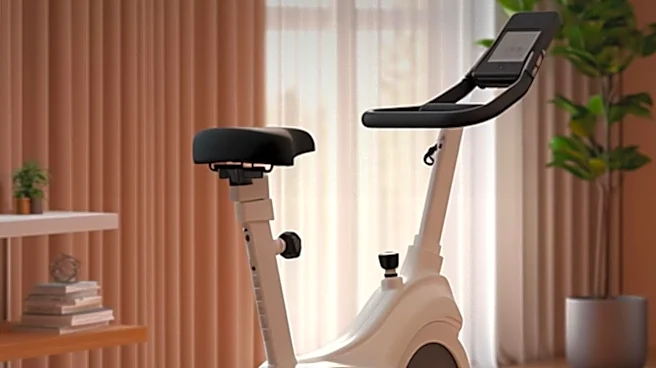
Peloton is investigating advanced AI-driven workout adaptations in real time, as indicated by recently published patent applications. These filings describe technology that could dynamically modify workout structures and generate new instructor voice
cues based on a member's live performance metrics, such as heart rate. The company aims to move beyond static, pre-programmed classes to offer a more personalized, 'choose your own adventure' fitness experience. This personalization would occur during the workout itself, with software determining the specific version of a class an individual receives. For instance, if a runner completes an interval faster than intended, the system could generate an instructor-style cue to adjust the next interval. Similarly, if a strength set is deemed too difficult, the system could reduce repetitions and provide corresponding coaching. These developments build on Peloton's existing AI and computer vision system, Peloton IQ, which already offers personalized workout plans and insights.
Why It's Important?
This technological advancement could significantly impact the connected fitness industry by offering a truly adaptive and personalized workout experience. For Peloton, it represents a strategic move to differentiate its offerings and potentially re-engage subscribers, especially after a recent 16% decline in stock value in August due to a drop in subscriptions and overall membership. By making workouts more responsive to individual needs and performance, Peloton could enhance user engagement, improve workout effectiveness, and reduce the likelihood of users abandoning their subscriptions due to a lack of personalized challenge or support. This could also set a new standard for interactive fitness platforms, pushing competitors to develop similar AI-driven adaptive features. The ability to generate AI-powered audio that preserves an instructor's coaching style while altering the workout could also streamline content creation and offer a wider variety of adaptive classes without requiring instructors to record multiple versions.
What's Next?
While these are patent applications and not yet commercialized products, their publication suggests Peloton's long-term vision for integrating AI more deeply into its core offerings. The company will likely continue to refine this technology, potentially conducting pilot programs or beta tests with select users to gather feedback and optimize the adaptive algorithms. The successful implementation of real-time AI adaptations could lead to new subscription tiers or premium features, attracting new users and retaining existing ones. Competitors in the fitness technology space will be closely watching Peloton's progress, and if successful, this could trigger a wave of innovation across the industry as other companies seek to develop their own adaptive workout solutions. Peloton's CEO, Peter Stern, has previously stated that AI is key to shifting from merely tracking activities to actively coaching users, indicating a clear strategic direction for these developments.
Beyond the Headlines
The ethical and practical implications of AI-driven real-time workout adaptations extend beyond immediate user experience. The reliance on biometric data for instantaneous adjustments raises questions about data privacy and security, as highly personal health information would be continuously processed. There's also the potential for a shift in the role of human instructors, who might transition from leading fixed classes to designing frameworks for AI to adapt. This technology could democratize access to highly personalized training, previously only available through expensive personal trainers, making it accessible to a broader audience. However, it also raises concerns about potential over-reliance on AI, where users might lose the intrinsic motivation or self-awareness that comes from independently pushing their limits. The long-term impact on user psychology and the potential for algorithmic bias in workout recommendations will also be critical considerations as this technology evolves.