


What's Happening?
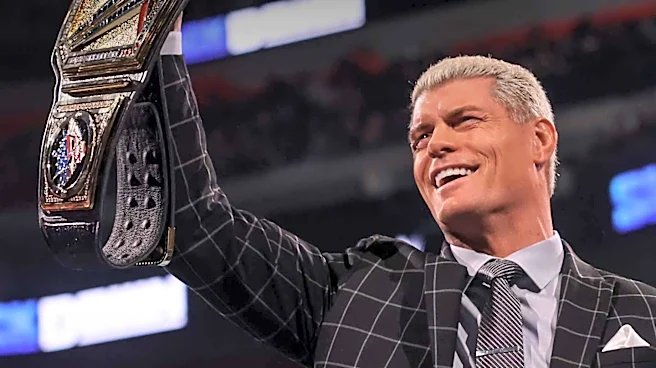
WWE star Cody Rhodes has publicly stated that the company will not use artificial intelligence (AI) to recreate the voice of his late father, legendary wrestler Dusty Rhodes. During an appearance on the Mythical Kitchen web series 'Last Meals,' Rhodes emphasized
this policy, noting that if there's a need to fill in any vocal gaps related to his father, either Bruce Prichard or Cody Rhodes himself would provide the voice. This declaration comes amidst WWE's broader adoption of AI technology for various promotional videos, highlighting a specific exception for the voice of Dusty Rhodes. The decision underscores a commitment to authenticity and personal connection when it comes to honoring the legacy of one of wrestling's most iconic figures.
Why It's Important?
This decision by Cody Rhodes and WWE is significant as it draws a clear line regarding the ethical use of AI in entertainment, particularly concerning the digital resurrection of deceased public figures. In an era where AI technology is rapidly advancing and being integrated into various media, the choice to forgo an AI-generated voice for Dusty Rhodes sets a precedent for respecting personal legacies and maintaining human authenticity. It reflects a broader conversation within the entertainment industry about the boundaries of AI application, especially when it involves the likeness and voice of individuals who can no longer consent. This stance could influence other organizations and estates to consider similar policies, prioritizing genuine human representation over technological replication, thereby impacting how historical figures are portrayed and remembered in media.
What's Next?
While Cody Rhodes' statement clarifies WWE's immediate policy regarding Dusty Rhodes' voice, it opens up a broader discussion about the future of AI in sports entertainment and beyond. Other entertainment companies and estates of deceased celebrities may look to WWE's approach as they navigate the ethical complexities of AI. This could lead to the development of more explicit guidelines or industry standards for the use of AI in recreating voices and likenesses. For WWE, this commitment means that any future content featuring Dusty Rhodes' voice will rely on human impersonation, likely by individuals closely associated with him, ensuring a personal touch. The ongoing evolution of AI technology will continue to challenge these boundaries, prompting continuous re-evaluation of ethical considerations in its application.
Beyond the Headlines
The decision to prohibit an AI-generated voice for Dusty Rhodes delves into profound ethical and cultural implications surrounding identity, legacy, and the nature of remembrance. It highlights a tension between technological capability and human sentiment, suggesting that some aspects of human experience, particularly the unique qualities of a person's voice, are deemed irreplaceable by artificial means. This stance reflects a desire to preserve the authentic memory of Dusty Rhodes, ensuring that his legacy is honored through human connection rather than digital simulation. It also touches upon the broader societal debate about the 'right to one's own voice' post-mortem and the potential for AI to dilute or distort the genuine essence of individuals. This ethical consideration could shape future legal frameworks and public perceptions regarding AI's role in preserving cultural heritage and personal identities.