

What's Happening?
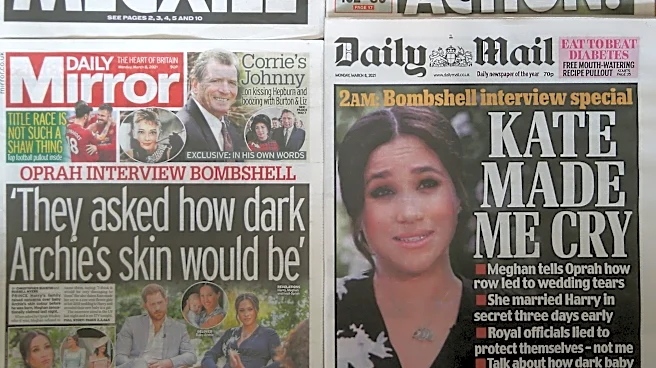
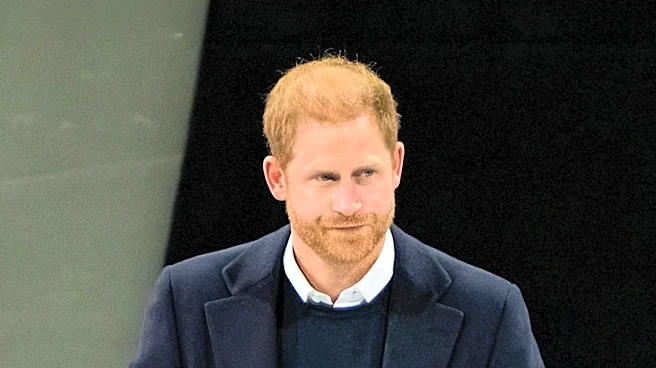
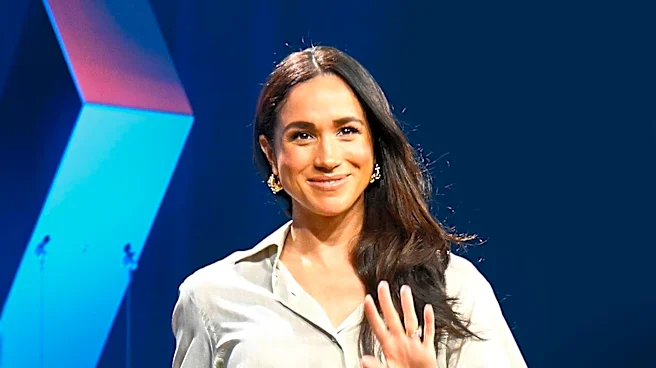
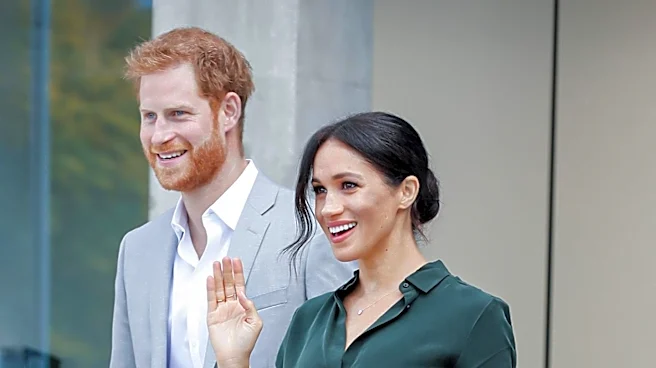
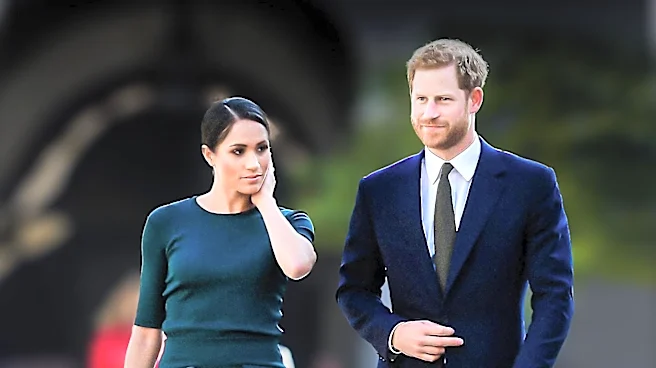
Prince Harry and Meghan Markle have returned to the UK, demonstrating their continued 'star power' and drawing significant public attention, which poses an unexpected challenge for Buckingham Palace. According to sources, the couple did not return merely
out of nostalgia but to 'reclaim their royal status,' recognizing that their duke and duchess titles hold more weight in Britain than their celebrity status in Hollywood. Their recent visit to Nottingham in October was reportedly a success, with crowds enthusiastically welcoming them. This public reception suggests a blueprint for their future engagements, indicating they may pursue a 'half-in, half-out' approach to royal life. However, their return also reignites concerns within the Palace about them potentially overshadowing the core work of the monarchy, which some describe as 'slightly dull at times.'
Why It's Important?
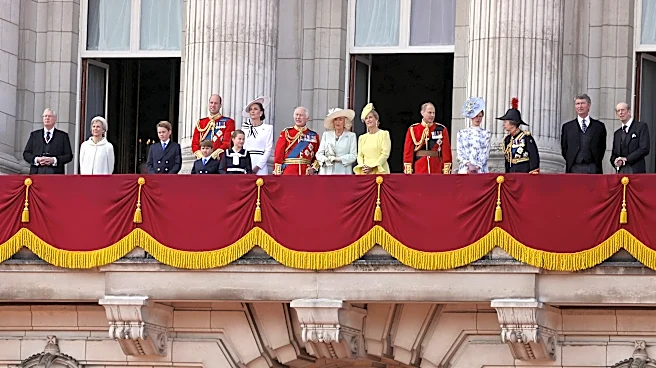
The return of Prince Harry and Meghan Markle to the UK and their continued ability to capture public attention underscore a significant dynamic within the modern monarchy. Their 'star power' creates a dilemma for King Charles and Prince William, who have maintained a frosty relationship with the couple. While historian Ed Owens suggests their return could be viewed positively if there isn't direct competition with working royals, author Craig Prescott notes the risk of them diverting attention from the monarchy's primary functions. This situation highlights the ongoing tension between traditional royal duties and the public's fascination with celebrity royals. The public's openness to welcoming them back, albeit not as working royals, indicates a desire for their continued presence in the royal sphere, which the Palace must navigate carefully to maintain its own relevance and public image.
What's Next?
The future for Prince Harry and Meghan Markle in the UK appears to involve a continued presence, potentially operating as 'nonroyal royals' who engage in public appearances without formal working royal duties. Their successful 'test' in Nottingham suggests they will likely continue to pursue this model, which could act as a blueprint for their future activities. However, the ongoing family feud with King Charles and Prince William remains unresolved, indicating that a full reintegration into the royal fold as working members is unlikely in the near future. The Palace will need to strategize how to manage the couple's public engagements to avoid direct competition with official royal tours and events. The public's evolving perception of their role will also influence their future trajectory and the monarchy's response.
Beyond the Headlines
The dynamic between Prince Harry and Meghan Markle and the Royal Family delves into broader questions about the evolution of monarchy in the 21st century. Their ability to command attention independently of official royal duties challenges the traditional structure and function of the institution. This situation also reflects a cultural shift where celebrity and influence can exist outside formal titles and roles. The concept of 'nonroyal royals' suggests a new hybrid status, where individuals can leverage their royal connections for public engagement while maintaining a degree of independence. This could set a precedent for how future generations of royals, or those connected to royal families, might navigate their public lives, blurring the lines between traditional duty and modern celebrity. The ongoing narrative also highlights the power of public appeal and media influence in shaping perceptions of royalty.