


What's Happening?
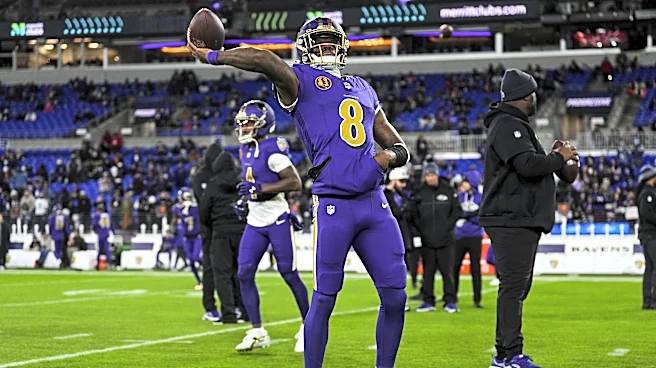
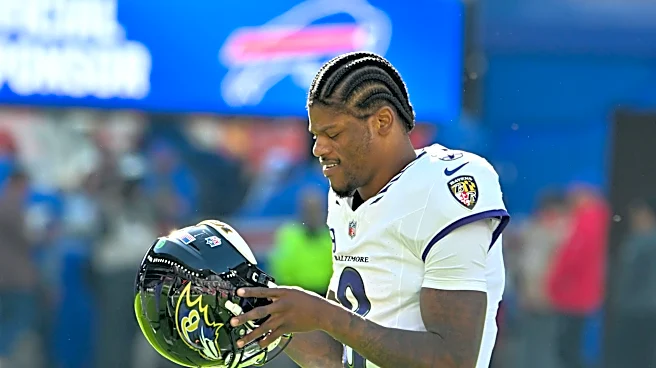
Mark Levin, a former NFLPA expert who advised Lamar Jackson during his previous contract negotiations, believes it is unlikely Jackson will remain with the Baltimore Ravens next season. Levin, who oversaw the NFLPA's Salary Cap and Agent Administration
department for 25 years, stated in an interview on 'The Daily Flock' that he would be surprised if Jackson is on the team in the upcoming year. This assessment comes as Jackson is currently sidelined with an injury and the Ravens are struggling without him. Levin was deeply involved in Jackson's past contract talks, which were unique due to Jackson negotiating without a traditional agent, relying instead on his mother and counsel from NFLPA figures like Levin. These negotiations resulted in a complex deal with a significant cap charge for 2027, effectively making Jackson a free agent after the 2026 season. The Ravens' general manager, Eric DeCosta, has faced challenges in building a sustained winning team and managing the team's cap situation, which Levin notes is among the worst in the NFL.
Why It's Important?
Levin's prediction carries significant weight due to his intimate knowledge of Jackson's past contract negotiations and the NFL's salary cap dynamics. His insight suggests a potential major shift for the Baltimore Ravens, who could lose their two-time MVP quarterback. Such a departure would necessitate a substantial rebuild for the franchise, impacting its competitive standing in the AFC. For Jackson, this could mean seeking a new team willing to meet his expected contract demands of $70 million or more per season with massive guarantees, despite his recent injury history. The situation highlights the complexities of player-team negotiations, especially when a star player operates without a traditional agent, and the long-term financial implications of contract structures on team roster building and future competitiveness. The Ravens' inability to secure a long-term extension with Jackson has created uncertainty that could lead to a significant roster overhaul.
What's Next?
If Levin's prediction holds true, the Baltimore Ravens will likely explore trading Lamar Jackson to secure compensation rather than losing him as a free agent without any return. This would initiate a significant rebuilding phase for the team, requiring them to find a new franchise quarterback and address other roster deficiencies. For Jackson, the next steps would involve evaluating potential suitors who can meet his financial demands and provide a competitive environment. The situation could lead to a high-stakes trade market for Jackson, with multiple teams potentially vying for his services. The Ravens' front office, led by Eric DeCosta, will face immense pressure to navigate this transition effectively, either by making a substantial offer to retain Jackson or by maximizing their return in a trade to facilitate a successful rebuild. The ongoing uncertainty surrounding Jackson's health and contract status will continue to be a dominant storyline in the NFL.
Beyond the Headlines
The ongoing saga between Lamar Jackson and the Baltimore Ravens extends beyond typical contract disputes, touching upon broader themes of player empowerment and the evolving role of agents in professional sports. Jackson's decision to negotiate directly, with counsel from NFLPA experts like Levin, challenges traditional norms in player representation. This approach, while granting Jackson more control, also places immense personal responsibility on him for complex financial and career decisions. The situation also underscores the delicate balance between a team's desire for long-term financial flexibility and a star player's demand for market-value compensation and security. The potential departure of a homegrown MVP like Jackson could also have significant implications for fan engagement and team identity, forcing the Ravens to redefine their future without their most prominent player. This scenario could serve as a case study for future player-team negotiations, particularly for high-profile athletes considering non-traditional representation.