






What's Happening?
The United States is home to numerous Japanese gardens, many of which are considered among the most beautiful and authentic outside of Japan. These gardens, influenced by America's history of Japanese immigration and Western fascination with Japanese design,
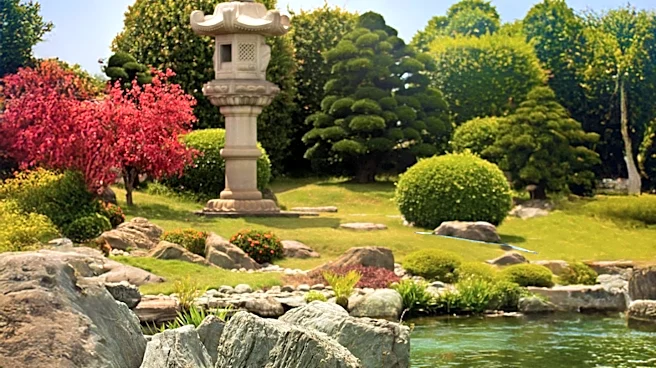
showcase various styles, including dry landscape gardens, strolling gardens, and tea gardens. Examples include the Portland Japanese Garden in Oregon, often cited as one of the finest, and the Seattle Japanese Garden in Washington, known for its manicured spaces within an arboretum. Other notable gardens are the Japanese Tea Garden in San Francisco, California, which dates back to the 1894 California Mid-Winter International Exposition, and the Japanese Hill-and-Pond Garden in Brooklyn, New York, one of the oldest, constructed in 1915. These sites often feature traditional elements like pine trees, raked stones, carp ponds, and symbolic spiritual iconography, with some designed for active strolling and others for contemplative viewing.
Why It's Important?
The prevalence and quality of Japanese gardens across the U.S. highlight the enduring cultural exchange and appreciation between Japan and America. These gardens serve as significant cultural landmarks, offering Americans a direct experience of Japanese aesthetic principles and philosophical traditions related to nature and design. They contribute to the diversity of public spaces, providing serene environments for reflection, education, and recreation. Economically, these gardens often attract tourists, boosting local economies through visitor spending on admissions, souvenirs, and nearby businesses. Furthermore, they play a role in horticultural preservation, maintaining specific plant species and traditional gardening techniques. The existence of such authentic gardens, some designed by legendary Japanese architects, underscores a deep historical connection and a continued commitment to cross-cultural understanding and artistic expression.
What's Next?
As interest in Japanese culture and mindfulness continues to grow, these gardens are likely to see sustained or increased visitation. This could lead to further investment in their preservation, expansion, and educational programs. Gardens may enhance their offerings with more cultural events, workshops on Japanese arts like tea ceremonies or bonsai, and collaborations with Japanese cultural institutions. There might also be a focus on digital engagement, using technology to share the gardens' history and design principles with a wider audience. Continued efforts to maintain authenticity while adapting to local climates and visitor needs will be crucial for their long-term success. The recognition of these gardens as significant cultural assets could also encourage the development of new Japanese-inspired public spaces in other U.S. cities.
Beyond the Headlines
The Japanese gardens in America offer more than just beautiful landscapes; they embody a profound philosophy that views nature as both a picture and a poem, emphasizing harmony, restraint, and symbolism. Unlike Western gardens often designed for active participation, some Japanese gardens are intended for passive viewing, encouraging contemplation and a deeper connection with the natural world. This distinction highlights differing cultural approaches to nature and art. The meticulous design, often incorporating elements like 'hide and reveal' scenery and miniature landscapes, reflects a sophisticated artistic tradition. These gardens serve as living classrooms, teaching visitors about Japanese history, aesthetics, and spiritual values. Their presence in America fosters a deeper cross-cultural dialogue, promoting an understanding of diverse perspectives on beauty, tranquility, and humanity's relationship with the environment.