







What's Happening?
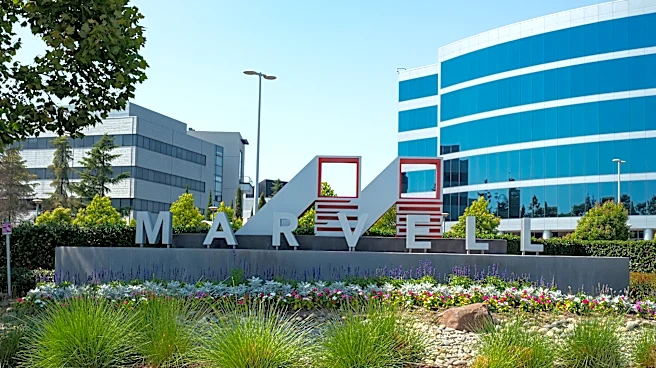
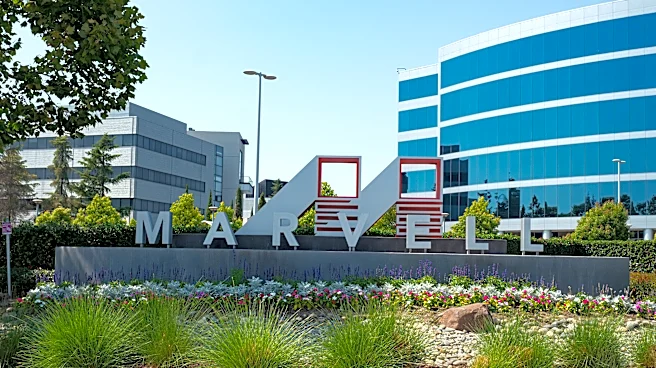
Marvell has announced an agreement to acquire Lumentum in an all-stock transaction valued at $115 billion. This deal, one of the largest in technology history, is driven by the increasing demand for AI infrastructure. Marvell, a semiconductor company
specializing in data infrastructure chips, will combine with Lumentum, a manufacturer of optical components crucial for high-speed data movement in AI data centers. The acquisition aims to create a comprehensive connectivity powerhouse, integrating chips and optical components to address the growing need for efficient data transfer within AI systems. The all-stock nature of the deal means Lumentum shareholders will receive Marvell shares, aligning incentives and preserving Marvell's cash reserves. This transaction signals a strong belief in the long-term growth of AI infrastructure spending.
Why It's Important?
This acquisition is a significant development for the U.S. technology industry, particularly in the burgeoning field of artificial intelligence. By combining Marvell's chip technology with Lumentum's optical components, the merged entity will be positioned to offer more integrated solutions for AI data centers. This vertical integration along the AI data path is critical as AI workloads demand staggering volumes of data to be moved quickly and efficiently. The deal underscores the strategic importance of optical networking, which has become a bottleneck technology in the AI era. For investors, it highlights a shift towards consolidation in the AI supply chain, with companies racing to secure critical capabilities. The transaction also sets a precedent for future mega-deals in the AI infrastructure sector, potentially reshaping competitive dynamics among chipmakers and optical vendors.
What's Next?
The completion of this $115 billion acquisition will require approval from shareholders of both Marvell and Lumentum, as well as rigorous regulatory reviews in multiple jurisdictions, including the United States and the European Union. These reviews will scrutinize the deal's potential impact on competition in the optical components and data-center semiconductor markets. The integration process following approval will be a critical challenge, involving the merging of product roadmaps, sales organizations, and engineering cultures. The combined company will need to demonstrate its ability to deliver integrated products that neither could have developed independently. The market will closely watch how this mega-merger influences the broader AI infrastructure landscape and whether it spurs further consolidation or strategic partnerships among competitors.
Beyond the Headlines
The Marvell-Lumentum deal reflects a deeper trend in the technology sector: the industrialization of AI. While early AI development focused on startups and model labs, the current phase is characterized by established giants consolidating the underlying infrastructure. This shift suggests that the most durable profits in the AI economy may lie in the fundamental physics of moving data, rather than solely in the AI models themselves. The historical cautionary tale of fiber-optic overbuild in the early 2000s serves as a reminder of the risks associated with infrastructure booms, but proponents argue that current AI demand is broader and more sustainable. The all-stock structure of the deal also highlights the acquiring company's confidence in its own valuation and the long-term prospects of the combined entity, signaling a strategic bet on the enduring nature of the AI buildout.