



What's Happening?
Home organization expert Joy of Frugal Creative Living has introduced several do-it-yourself (DIY) storage hacks that leverage recycled household items to declutter and organize various spaces without significant cost. These methods focus on repurposing
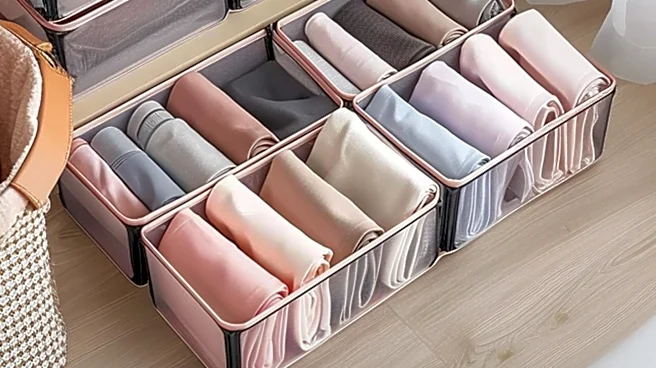
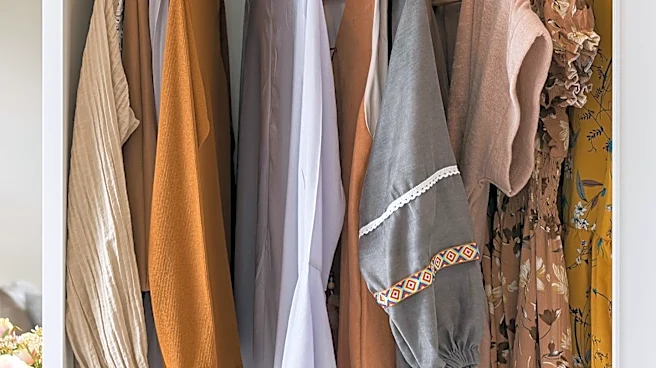
everyday objects such as empty toilet paper rolls, foil rolls, lunch meat containers, and cereal boxes. For instance, toilet paper rolls are cut into rings, decorated, and hot-glued into a flat box to create a jewelry organizer. Empty foil rolls are cut and slid onto cooling rack bars to create a multi-pant hanger, maximizing vertical closet space. Lunch meat containers are cut in half, covered, and attached to cabinet doors with nano tape to hold powder and sauce packets. Cereal boxes are transformed into honeycomb drawer dividers by cutting them into strips and gluing them together. These innovative solutions aim to provide practical and affordable ways for individuals to manage clutter in their kitchens, closets, and drawers.
Why It's Important?
These DIY storage hacks are important because they offer accessible and budget-friendly solutions for home organization, which can significantly impact daily life. By encouraging the repurposing of materials, these methods promote sustainability and reduce waste, aligning with broader environmental goals. For individuals, effective organization can lead to reduced stress, increased efficiency in daily routines, and a more functional living environment. The low cost of these hacks makes them particularly valuable for those on a tight budget, democratizing access to organizational tools that might otherwise be expensive. Furthermore, the creative aspect of these projects can foster a sense of accomplishment and encourage resourcefulness among households, demonstrating that effective solutions don't always require new purchases.
What's Next?
The continued sharing and adoption of these types of DIY storage solutions are likely to grow as more individuals seek cost-effective and sustainable ways to manage their living spaces. Content creators and home organization influencers may further popularize these methods, leading to more variations and adaptations. Workshops or online tutorials focusing on upcycling for home organization could emerge, providing hands-on guidance. Retailers specializing in craft supplies or organizational tools might see an increased interest in basic materials that can be repurposed, such as decorative tapes, glues, and simple racks. The trend could also inspire manufacturers to design products that are more easily repurposed or made from recycled content, further integrating sustainability into consumer goods.
Beyond the Headlines
Beyond the immediate benefit of decluttering, these DIY storage hacks reflect a broader cultural shift towards conscious consumption and resourcefulness. In an era of increasing environmental awareness, the emphasis on repurposing and reducing waste resonates deeply with consumers looking for practical ways to live more sustainably. This movement challenges the traditional consumerist model that often promotes buying new items for every need. Ethically, it encourages a mindset of valuing existing resources and finding creative uses for them, rather than discarding them. Legally, while not directly impacted, a greater public embrace of such practices could subtly influence policy discussions around waste management and recycling initiatives. Culturally, it fosters a sense of community around sharing practical, eco-friendly tips, potentially leading to more collaborative efforts in sustainable living.