

What's Happening?
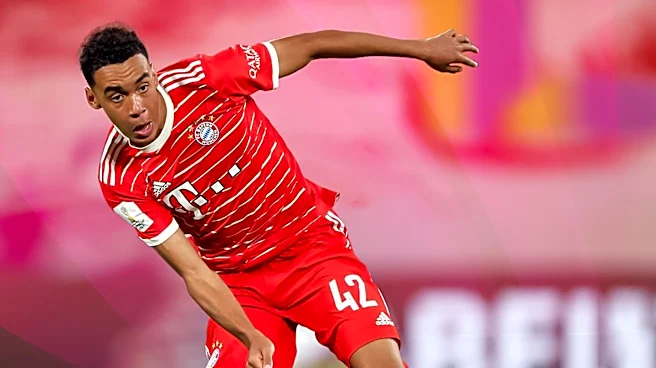
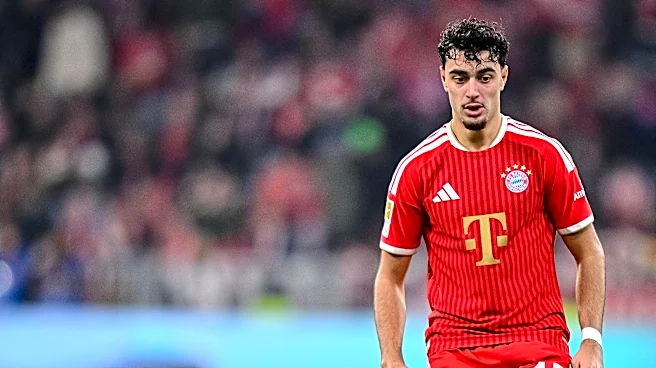
Former Bayern Munich goalkeeper and board chairman Oliver Kahn has publicly criticized the club's honorary president, Uli Hoeneß, regarding comments Hoeneß made about player Jamal Musiala's contract and health situation. Hoeneß had hypothetically questioned
Musiala's lucrative contract, which reportedly earns the 23-year-old up to €30 million annually, given his ongoing neurological dysfunction and recent injuries. Musiala's condition, which can cause brief absences and led to collapses in August, is now controlled with medication. Kahn argued that a club should stand by its players beyond just their contracts, stating that the club 'bought the risk too' when signing the contract. He emphasized that while top club officials must consider financial aspects, they should not lose sight of the individual behind the 'unavailable asset.'
Why It's Important?
This public disagreement between two prominent figures in Bayern Munich's leadership highlights a tension between the financial realities of professional sports and the human element of player welfare. Kahn's remarks underscore the expectation that clubs should demonstrate loyalty and support to players, especially when dealing with health issues, rather than solely focusing on contractual obligations and performance metrics. Such discussions can influence how other major sports organizations approach player contracts, particularly for those with long-term health concerns. It also brings into question the role of honorary positions within sports clubs and the impact their public statements can have on team morale and player relations. The situation could set a precedent for how player health is discussed and managed in high-stakes sports environments.
What's Next?
The public nature of Kahn's criticism suggests that internal discussions within Bayern Munich regarding player welfare and contract management may intensify. While Musiala is currently recovering from a muscle injury and his neurological condition is controlled, the club will likely need to address the perception created by Hoeneß's comments. This could involve clearer communication from the club's current leadership about their stance on player support and contract fulfillment. The incident may also prompt other clubs to review their public relations strategies concerning player health and contractual agreements to avoid similar controversies. Musiala's return to play and subsequent performance will be closely watched, both for his personal recovery and as a test of the club's commitment to its players.
Beyond the Headlines
The controversy extends beyond a simple disagreement, touching upon the ethical responsibilities of sports organizations towards their athletes. Hoeneß's comments, even if hypothetical, raise questions about the commodification of athletes and whether their value is solely tied to their on-field performance. Kahn's counter-argument champions a more holistic view, suggesting that clubs have a moral obligation to support players through challenges, especially health-related ones. This debate reflects a broader societal discussion about employee rights and corporate responsibility, particularly in industries where individuals are highly valued assets. The incident could influence future contract negotiations, potentially leading to clauses that better protect players facing long-term health issues and fostering a culture where player well-being is prioritized alongside financial considerations.