







What's Happening?
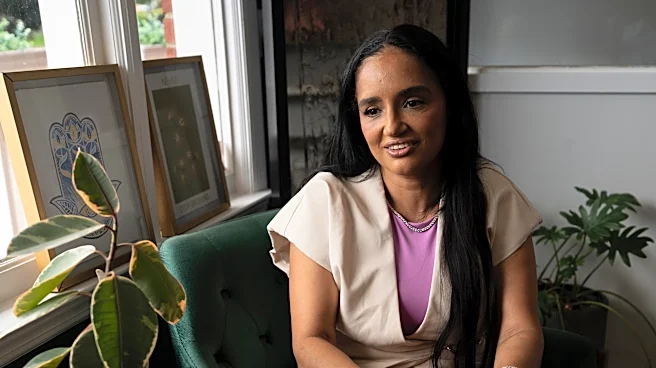
Two women, Stacey Aquino, 53, and Enitza Templeton, 43, who previously embraced the 'trad wife' lifestyle, are now speaking out to caution young women about the potential financial and personal vulnerabilities associated with such roles. Aquino, who married
at 19 and became a mother at 21, and Templeton, who married at 26 and had four children, both found themselves divorced and without independent income or traditional work experience. They highlight the isolation they experienced and the power imbalances that can arise when one partner is solely financially dependent. Aquino, who divorced in 2021, shared on TikTok that she had no access to money when she filed for divorce, despite her ex-husband's previous assurances that her caregiving was 'work.' Templeton, raised with evangelical values, felt intense pressure to be a 'good woman' through serving her family but ultimately felt unfulfilled.
Why It's Important?
This emerging narrative from former 'trad wives' is significant as it challenges the romanticized portrayal of traditional homemaking roles often seen on social media. It brings to light critical issues of financial literacy, marital agreements, and the valuation of caregiving work within relationships. The experiences of Aquino and Templeton underscore the economic risks women can face when they forgo independent careers and financial autonomy, particularly in the event of divorce or unforeseen circumstances. Family lawyers and financial experts, such as Catherine Shanahan, co-founder of My Divorce Solution, emphasize the importance of clear expectations and mutual understanding about finances and caregiving responsibilities, ideally through prenuptial agreements. This discussion is crucial for young women contemplating traditional roles, encouraging them to consider long-term financial security and personal fulfillment beyond immediate marital dynamics.
What's Next?
The warnings from former 'trad wives' like Stacey Aquino and Enitza Templeton are likely to fuel ongoing conversations about gender roles, financial independence, and the value of caregiving in modern society. Social media platforms will continue to be a battleground for these narratives, with influencers promoting the 'trad wife' lifestyle on one side and those advocating for financial independence and equitable partnerships on the other. Experts like Neha Ruch, author of 'The Power Pause,' suggest that couples need foundational conversations about their life goals, financial arrangements, and the equitable valuation of caregiving before starting a family. This could lead to increased awareness and demand for prenuptial agreements, even among couples without significant assets, as a tool for discussing and formalizing financial expectations and protections. The dialogue may also prompt a re-evaluation of how society and legal systems recognize and compensate care work.
Beyond the Headlines
The 'trad wife' phenomenon and the subsequent warnings from those who have left the lifestyle reveal deeper societal tensions regarding women's roles, economic empowerment, and the evolving nature of marriage. The romanticized online portrayal often overlooks the practical realities of financial dependence, lack of career progression, and potential isolation. This issue touches upon the ethical implications of promoting a lifestyle that may leave individuals vulnerable, particularly when the 'influencers' themselves often monetize their content, creating an income stream that is absent for many who follow their advice. It also highlights the persistent undervaluation of care work in America, which, as Neha Ruch points out, is often 'dumbed down to diapers and laundry' despite its complexity and demanding nature. The stories of Aquino and Templeton serve as a stark reminder that while personal choices are paramount, understanding the long-term economic and social consequences of those choices is vital for individual well-being and societal equity.