

What's Happening?
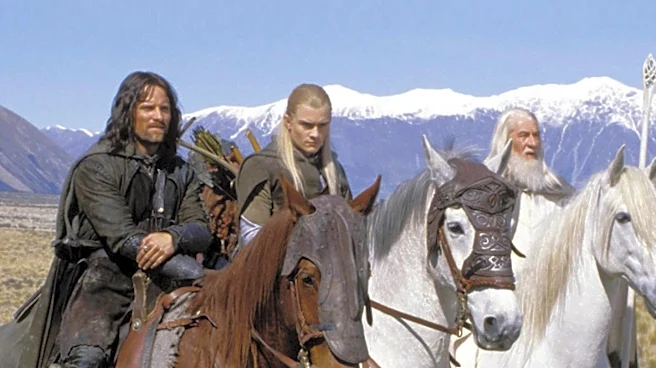
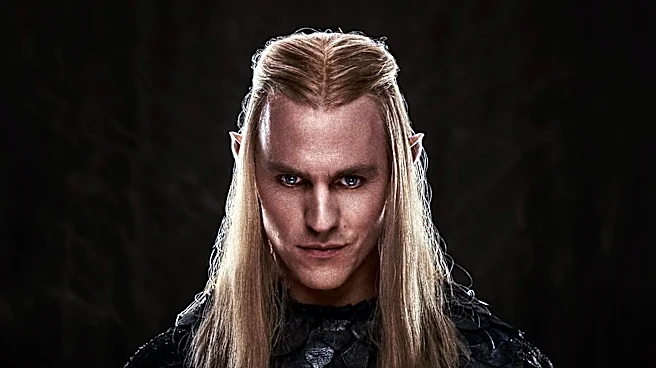
The television series, "The Lord of the Rings: The Rings of Power," is not strictly canonical within the universe established by Peter Jackson's "Lord of the Rings" film trilogy. Co-showrunner Patrick McKay addressed the relationship between the series and
Jackson's films, indicating that while there is room for various interpretations of J.R.R. Tolkien's Middle-earth, "The Rings of Power" exists alongside other adaptations rather than being a direct continuation or part of Jackson's cinematic canon. The series is set thousands of years before the events depicted in Jackson's films, which theoretically allows for coexistence. However, McKay emphasized that the show is in conversation with, but not strictly canon to, the films. This clarification comes as the franchise's canon has become increasingly complex with new productions.
Why It's Important?
This distinction is significant for fans and the entertainment industry, particularly regarding intellectual property and franchise management. For viewers, understanding the canonical status helps manage expectations and interpret narrative connections within the broader Middle-earth universe. For studios and creators, it highlights the challenges and strategies involved in expanding beloved franchises while respecting existing adaptations. The decision to position "The Rings of Power" as a separate interpretation rather than a direct canonical extension of Jackson's films allows for creative freedom in storytelling without being constrained by the established cinematic narrative. This approach can lead to diverse interpretations of Tolkien's work, potentially attracting new audiences while retaining the core essence of the original material.
What's Next?
As "The Lord of the Rings: The Rings of Power" continues with its third season, its independent canonical status will likely influence future storytelling decisions and fan engagement. Warner Bros. is also developing other "Lord of the Rings" movies, including "The Hunt for Gollum," which Andy Serkis is helming. The existence of multiple interpretations and adaptations of Tolkien's work suggests a future where various narratives coexist, each offering a unique perspective on Middle-earth. This trend could lead to more diverse content, but also potential confusion for audiences trying to navigate the different timelines and canonical relationships within the expansive fantasy world.
Beyond the Headlines
The approach taken with "The Rings of Power" reflects a broader trend in the entertainment industry where popular intellectual properties are expanded through multiple, sometimes non-canonical, adaptations. This strategy allows for greater creative exploration and caters to different audience segments. However, it also raises questions about the integrity of a unified narrative and the potential for franchise fatigue. The emphasis on "conversation" between different adaptations, rather than strict adherence to a single canon, suggests a more fluid and expansive approach to storytelling in established universes. This could set a precedent for how other long-standing franchises manage their growth and evolution across various media.