
What's Happening?
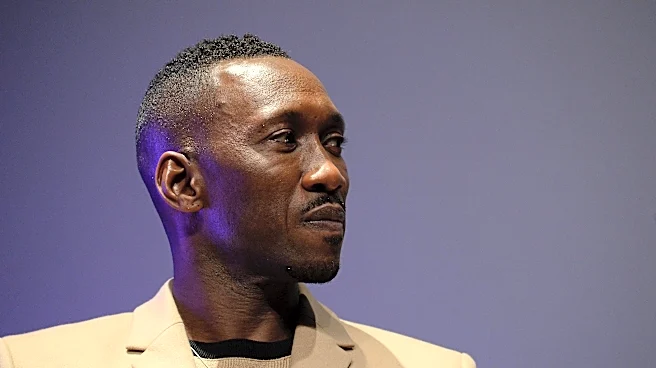
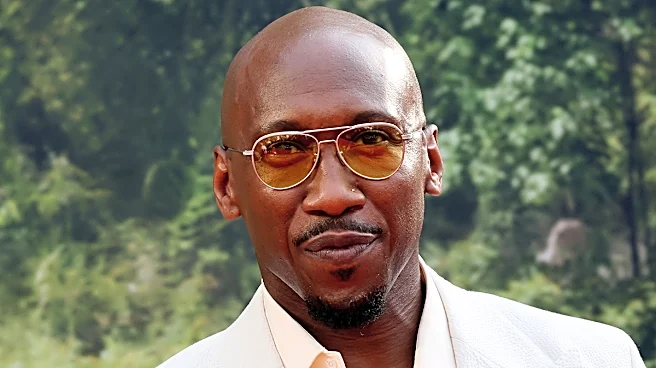
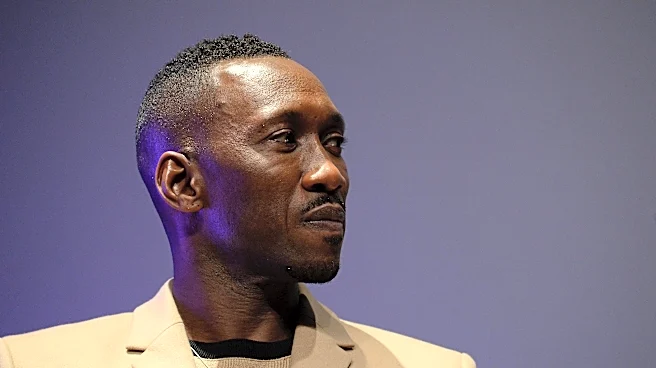
Mahershala Ali, a two-time Oscar winner, has voiced his frustrations regarding the lack of significant career opportunities for Black actors in Hollywood, even after achieving critical acclaim. During
an appearance on the '7PM in Brooklyn' podcast, Ali questioned the true impact of Oscar wins, stating that they 'don't translate to anything real' in terms of securing diverse and substantial roles. He highlighted that despite his accolades for 'Moonlight' and 'Greenbook,' the majority of greenlit projects do not have roles suitable for him. Ali emphasized that the issue is not a shortage of talented actors, but rather a scarcity of quality material that 'check certain boxes' and are not merely 'diversity projects.' He noted that even with 'Marvel Money' and 'Disney Money,' the 'Blade' reboot, in which he was cast, has faced significant delays over seven years.
Why It's Important?
Mahershala Ali's comments shed light on a persistent issue within the U.S. entertainment industry: the systemic barriers faced by Black actors, even those with significant critical and commercial success. His experience underscores that while awards can bring recognition, they do not automatically translate into equitable opportunities or a wider range of roles, particularly for actors of color. This situation impacts not only individual careers but also the broader landscape of Hollywood, limiting the diversity of stories told and perspectives represented on screen. It suggests that the industry's efforts towards inclusion may be superficial if they do not address the fundamental issue of creating and greenlighting projects that genuinely feature and center diverse talent. This disparity can lead to a brain drain, where talented actors are underutilized, and audiences are deprived of richer, more varied narratives.
What's Next?
Mahershala Ali's candid remarks are likely to reignite discussions within Hollywood about diversity, equity, and inclusion, particularly concerning the types of roles and opportunities available to Black actors. While individual actors can pursue producing their own projects, Ali noted this is a lengthy process, typically taking 'three to five years.' His comments may prompt industry executives, studios, and casting directors to re-evaluate their project development and greenlighting processes to ensure a more equitable distribution of roles and resources. Advocacy groups and organizations promoting diversity in entertainment may leverage Ali's statements to push for more concrete changes, such as increased funding for diverse storytelling and greater representation in decision-making roles. The ongoing delays with the 'Blade' reboot, despite Ali's involvement, will also be a point of scrutiny, serving as a tangible example of the challenges he describes.
Beyond the Headlines
Beyond the immediate implications for Mahershala Ali's career, his statements touch upon deeper cultural and ethical dimensions within the entertainment industry. The idea that even two Oscar wins do not guarantee a steady stream of quality roles for a Black actor highlights a fundamental flaw in how talent is valued and opportunities are distributed. This situation can perpetuate stereotypes by limiting Black actors to a narrow range of roles or 'diversity projects,' rather than allowing them to explore the full spectrum of human experience. It also raises questions about the true meaning of 'meritocracy' in Hollywood and whether systemic biases continue to overshadow individual achievement. Ali's frustration reflects a broader societal struggle for equitable representation and the challenge of dismantling ingrained prejudices, even in industries that outwardly champion progressive values. His comments serve as a powerful reminder that surface-level diversity initiatives may not be enough to create lasting, meaningful change.