




What's Happening?
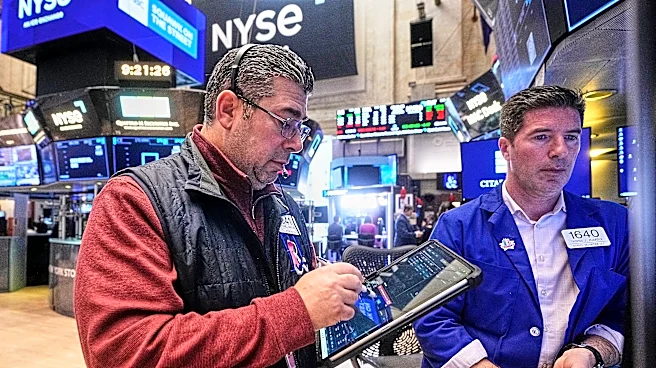
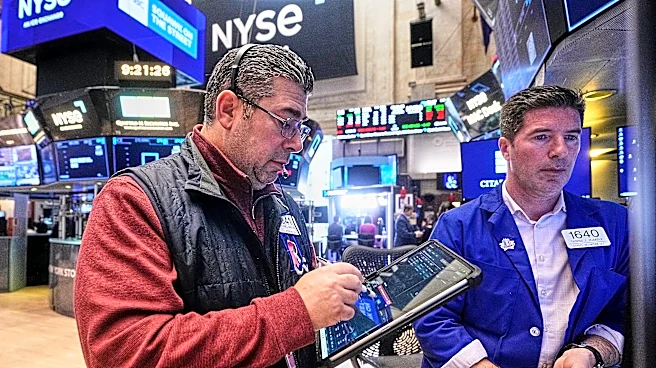
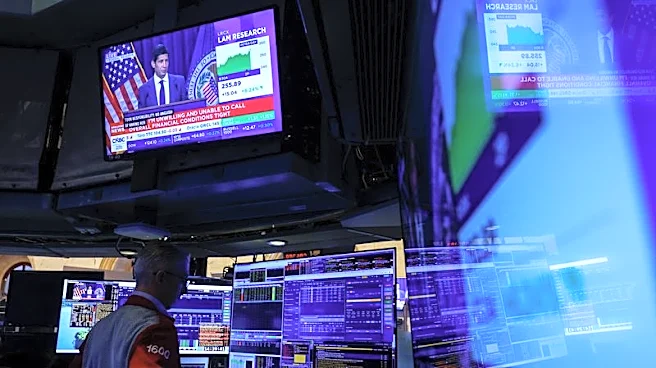
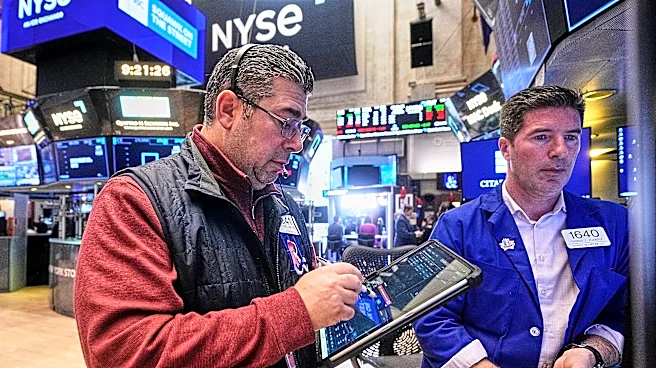
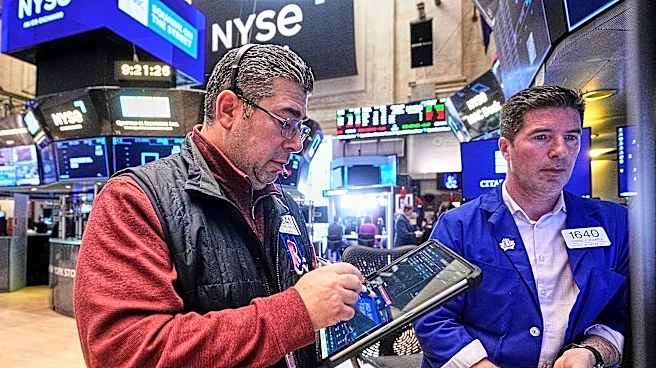
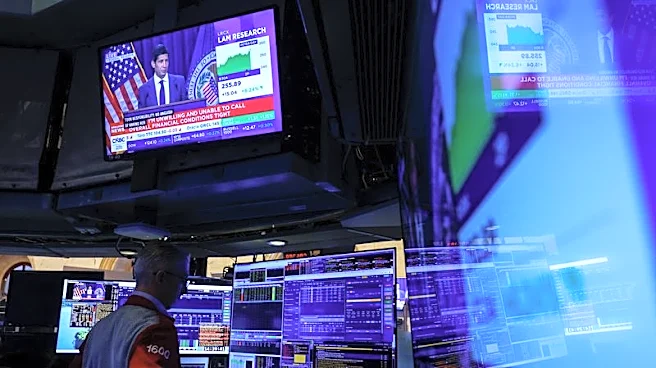
Wall Street is experiencing a significant sell-off in AI-related stocks, with the Nasdaq 100 facing a potential $2 trillion wipeout in October. This downturn is driven by investor concerns that the massive capital expenditures by Big Tech companies like
Meta, Alphabet, and Amazon on artificial intelligence infrastructure may not yield expected returns quickly enough. Despite strong revenue growth across the 'Magnificent Seven' since ChatGPT's 2022 launch, the timeline for profitability from these AI investments remains uncertain. Intel plunged 25% in premarket trading due to weaker guidance, and Amazon shares tumbled 7% following an earnings report indicating increased AI spending. Alphabet's shares also fell over 12% after investors expressed concerns about a slowdown in Google's search advertising business and a ramp-up in AI spending, leading to its worst month on record. This sentiment reflects a shift from the 'hopes and dreams' phase of AI investment to a 'show me' phase, where investors demand tangible evidence of profit and cash generation from AI initiatives.
Why It's Important?
The current market reaction highlights a critical juncture for the U.S. technology sector and broader economy. The substantial investments in AI, while driving innovation, are now under intense scrutiny regarding their financial viability. This skepticism could lead to a re-evaluation of investment strategies across the tech industry, potentially slowing down the pace of AI development if companies struggle to demonstrate clear returns on investment. The sell-off impacts major tech companies, affecting their market capitalization and potentially their ability to fund future projects. Furthermore, the shift in investor sentiment could influence capital allocation, with a potential rotation away from high-growth, high-capex AI stocks towards more defensive sectors. This could also affect smaller AI startups and their access to funding, as investors become more risk-averse and demand clearer paths to profitability. The market's demand for immediate returns on AI spending could shape the future trajectory of AI commercialization and its integration into various industries.
What's Next?
The market will continue to closely monitor upcoming earnings reports from tech companies for clearer indications of AI's profitability and return on investment. Analysts anticipate that companies will need to provide more concrete evidence of how their AI spending translates into earnings and cash flow to regain investor confidence. The upcoming midterm elections are also seen as a significant test for markets, with uncertainty expected to decrease regardless of the outcome, which could positively impact stocks. Experts suggest that while the AI trade is experiencing a correction, it is not 'out,' indicating that pullbacks are a normal part of early-stage AI development. However, the increased scrutiny on capital expenditures and the demand for tangible returns will likely persist, influencing corporate strategies and investor behavior in the AI sector for the foreseeable future.
Beyond the Headlines
The current market dynamics reveal a deeper tension between rapid technological advancement and traditional financial metrics. The 'show me' phase of AI investment underscores the challenge of valuing nascent technologies with long-term potential but uncertain short-term profitability. This situation could lead to a more disciplined approach to innovation, where companies are pressured to articulate clear business models and revenue streams for their AI initiatives. It also raises questions about the sustainability of growth fueled primarily by speculative investment rather than proven returns. The increased focus on free cash flow and balance sheets could prompt a shift in corporate priorities, potentially favoring more mature, revenue-generating AI applications over experimental, high-cost research. This could also have implications for the competitive landscape, as companies with stronger financial positions may be better equipped to weather investor skepticism and continue their AI development.