
What's Happening?
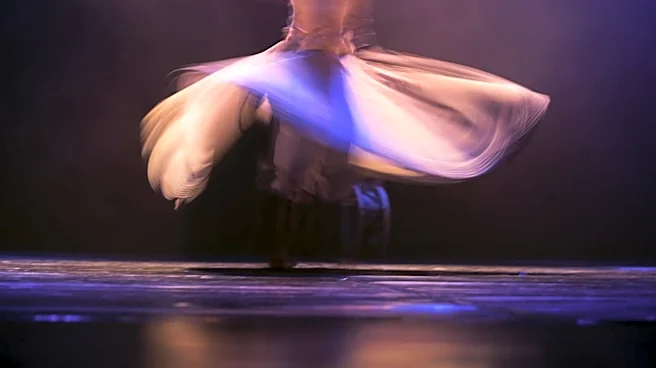
Yaya Sanou, a dancer and choreographer from Burkina Faso, has developed an innovative dance technique called Vibra-Signe, which allows deaf and hard-of-hearing individuals to interpret and express rhythm
through a gestural language. This technique blends vibrations, gestures, and sign language, enabling dancers to feel the pulse of music through the floor and physical cues. Sanou founded the Art au-Delà du Handicap (Art Beyond Disability) nonprofit association in 2016 to promote cultural inclusion for disability groups. His Fientan Company, composed entirely of deaf and hard-of-hearing dancers, has since toured internationally across Africa and Europe, performing works like 'Tamacien Don' (Dance of the Deaf). The technique, initially for deaf students, has expanded to include individuals with various impairments, such as motor and sensory disorders, and visually impaired classes now incorporate spoken words and sounds.
Why It's Important?
Vibra-Signe represents a significant advancement in inclusive arts and cultural expression for individuals with disabilities. By providing a method for deaf and hard-of-hearing people to engage with dance, it challenges traditional perceptions of artistic participation and accessibility. The global reach of Sanou's Fientan Company, touring across continents, highlights the universal appeal and transformative power of this technique. It fosters personal fulfillment, changes moods, and brings joy to participants, as observed by Sanou. The emotional reactions from hearing audiences, who are often moved to tears, underscore the profound impact of witnessing such a unique and expressive art form, demonstrating that artistic boundaries can be transcended through innovation and dedication.
What's Next?
Yaya Sanou continues to refine his work, with future aspirations including a show titled 'A Nienfo' (Say It), which will feature dancers with and without disabilities, including those with hearing, motor, and vision loss. This initiative aims to promote an inclusive society and encourage wider adoption of the Vibra-Signe technique. Sanou invites deaf audiences to embrace and make the technique their own, suggesting its potential for broader application in dance transmission. The continued touring and public performances by the Fientan Company, along with the expansion of the technique to various disabilities, indicate a growing movement towards greater inclusivity and accessibility in the arts worldwide.
Beyond the Headlines
The development of Vibra-Signe goes beyond merely teaching dance; it addresses deeper societal issues of inclusion, self-expression, and the breaking down of barriers for people with disabilities. It highlights the ethical imperative to create accessible cultural opportunities and challenges the notion that certain art forms are exclusive to specific abilities. The technique's success in eliciting strong emotional responses from diverse audiences suggests a powerful cultural shift in how disability and artistic talent are perceived. It also underscores the long-term potential for art to serve as a catalyst for social change, fostering empathy and understanding across different communities, and promoting a more inclusive global society.