





What's Happening?
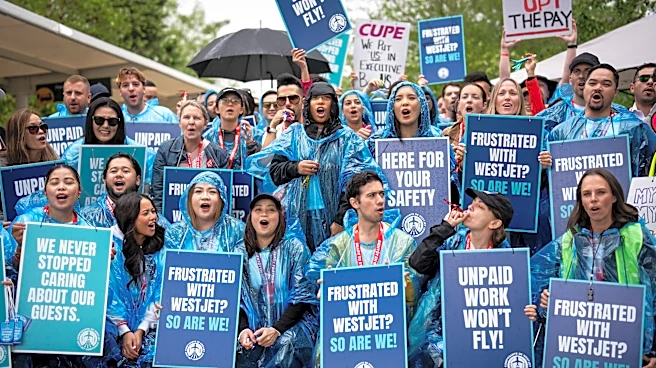
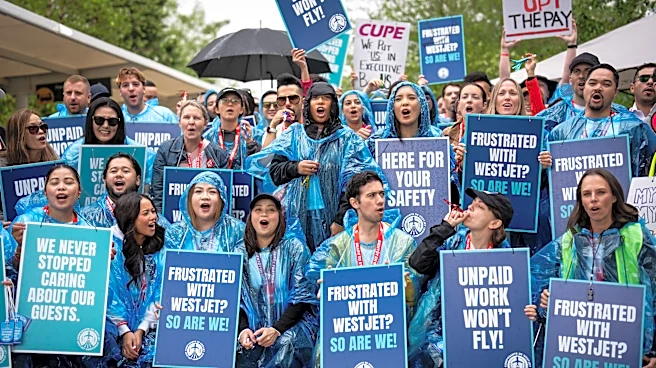
WestJet and the Canadian Union of Public Employees (CUPE) local 8125 have reached a tentative agreement, ending the strike by WestJet flight attendants. The agreement, announced early Monday morning, addresses key issues such as compensation for work
performed on the ground, including boarding passengers and managing delays. The deal includes a 13% pay increase effective October 1, retroactive to January 1, 2026, with additional annual increases through 2029. A 'duty pay premium' was also introduced to address claims of unpaid work. The agreement requires ratification within 30 days, during which time a strike or lockout is not possible. The settlement was welcomed by Federal Jobs Minister Patty Hajdu and the Canadian Chamber of Commerce, highlighting its importance for travelers and businesses.
Why It's Important?
The resolution of the WestJet strike is significant for the airline industry and travelers, as it prevents further disruptions and restores confidence in WestJet's operations. The agreement addresses long-standing compensation issues, potentially setting a precedent for labor relations in the airline sector. It also highlights the importance of fair labor practices and the need for a robust framework to prevent future disputes. The settlement is crucial for maintaining the flow of time-sensitive goods and services, which are vital for economic stability. The agreement's impact extends beyond WestJet, as it may influence negotiations and labor relations across the industry, promoting better working conditions and compensation for airline employees.
What's Next?
The tentative agreement will be presented to CUPE members for ratification within the next 30 days. During this period, WestJet will work to restore its network and resume normal operations. The airline will need to address the backlog of flights and ensure compliance with safety regulations before fully resuming services. The outcome of the ratification process will determine the final implementation of the agreement. Stakeholders, including travelers and businesses, will be closely monitoring the situation to assess the long-term implications for the airline industry. The resolution may also prompt discussions on improving labor relations frameworks to prevent similar disruptions in the future.