



What's Happening?
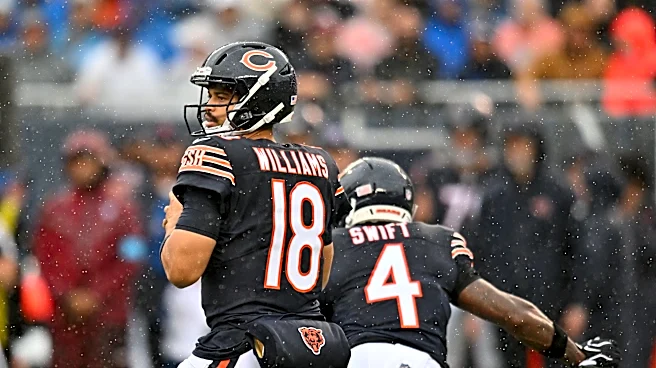
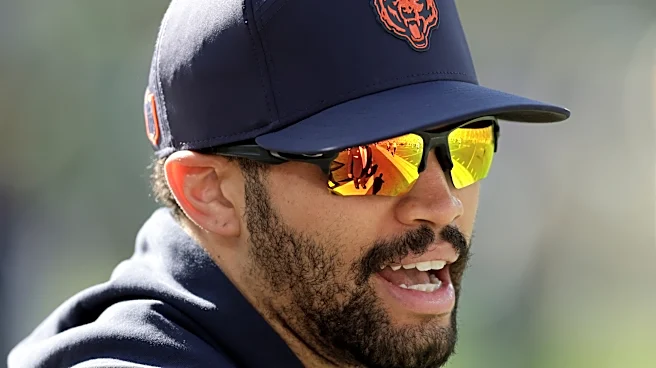
Chicago Bears Quarterback Caleb Williams returned to full practice participation after nearly a month but declined to disclose the medical grade of his hamstring tear to reporters. During a press conference, Williams stated that the information was 'not
deserving' of public disclosure, expressing frustration with national reporting that he claimed had inaccurately characterized his injury. He mentioned that he felt a 'pop' during a fourth-quarter scramble in the Week 2 loss to Minnesota, leading to his emotional exit from the game. Williams defended his emotional reaction, attributing it to his commitment to his team. Despite undergoing extensive daily rehabilitation and reporting top sprint speeds in recent workouts, his status for the upcoming Sunday game against the Atlanta Falcons remains undecided, pending medical clearance.
Why It's Important?
This incident highlights the ongoing tension between professional athletes and the media regarding injury transparency. For NFL teams, player health is a critical factor influencing game outcomes, team strategy, and financial investments. The lack of specific information about a star quarterback's injury can create uncertainty for fans, fantasy football players, and sports bettors, impacting engagement and related industries. From a team management perspective, withholding detailed injury information might be a strategic move to prevent opponents from gaining an advantage. However, it can also lead to speculation and distrust from the media and public. This situation underscores the delicate balance between a player's right to privacy and the public's expectation of transparency in professional sports, especially concerning high-profile athletes whose health directly affects team performance and league narratives.
What's Next?
Caleb Williams's immediate future involves awaiting medical clearance to determine his availability for the upcoming game against the Atlanta Falcons. His participation will depend on the team's medical staff assessing his readiness. Regardless of his playing status, the interaction with reporters is likely to fuel further discussion about media access and player communication in the NFL. The Bears organization will need to manage public perception and provide updates as appropriate, balancing competitive interests with transparency. If Williams plays, his performance will be scrutinized for any signs of lingering effects from the injury. If he remains sidelined, the team's backup quarterback will step in, and the focus will shift to the timeline for Williams's full return and the potential impact on the Bears' season trajectory.
Beyond the Headlines
The exchange between Caleb Williams and reporters touches upon broader themes of athlete autonomy and the commodification of sports figures. In an era where athletes are increasingly expected to be accessible and transparent, Williams's decision to guard his medical information asserts a boundary. This can be seen as a pushback against the intense public and media scrutiny that often reduces athletes to their physical performance and health status. It raises questions about the ethical obligations of sports journalism and the extent to which an athlete's personal medical details should be public domain. This dynamic reflects a growing trend where athletes, particularly those with significant influence, are taking more control over their narratives and challenging traditional media expectations, potentially reshaping the relationship between sports stars and the press.