







What's Happening?
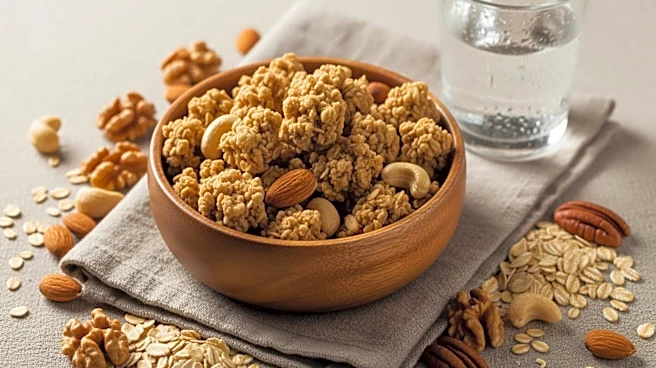
Recent insights from health experts highlight that granola, a popular breakfast choice often perceived as healthy, may contribute to increased blood pressure. Dr. Cheng-Han Chen, an interventional cardiologist, and Dr. Katherine N. Balantekin, a nutrition
expert, emphasize that many granola products, especially processed ones, contain high levels of added sugars and sodium. These components can lead to insulin resistance and fluid retention, both of which are linked to elevated blood pressure. The American Heart Association recommends limiting sodium intake to 2,300 milligrams per day, with an ideal target of 1,500 milligrams. Granola often exceeds these recommendations, posing a risk to those managing hypertension.
Why It's Important?
The potential impact of granola on blood pressure is significant given that nearly half of American adults experience high blood pressure, often unknowingly. This condition is a major risk factor for heart disease and stroke, making dietary awareness crucial. The findings suggest that consumers should be cautious about granola's nutritional content, particularly its sugar and sodium levels. This awareness is vital for public health, as it encourages individuals to make informed dietary choices that support cardiovascular health. The emphasis on homemade granola as a healthier alternative underscores the importance of ingredient control in managing health outcomes.
What's Next?
Consumers are advised to scrutinize granola labels, opting for products with lower sodium and sugar content. Health experts recommend using granola as a topping rather than a main dish, pairing it with heart-healthy foods like unsweetened yogurt. Additionally, making granola at home allows for better control over ingredients, reducing potential health risks. As awareness grows, there may be increased demand for healthier granola options, prompting manufacturers to reformulate products. Healthcare providers may also play a role in educating patients about the dietary factors influencing blood pressure, potentially leading to broader public health initiatives.