



What's Happening?
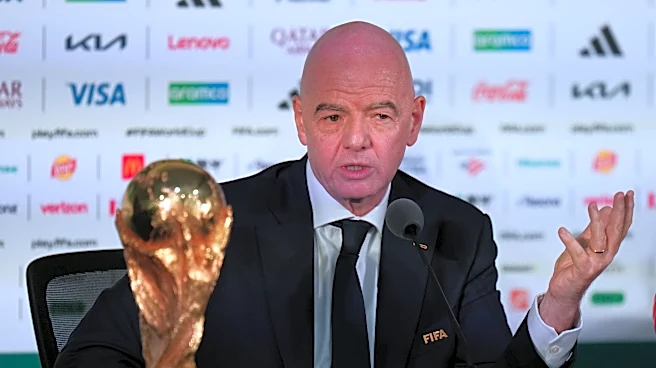
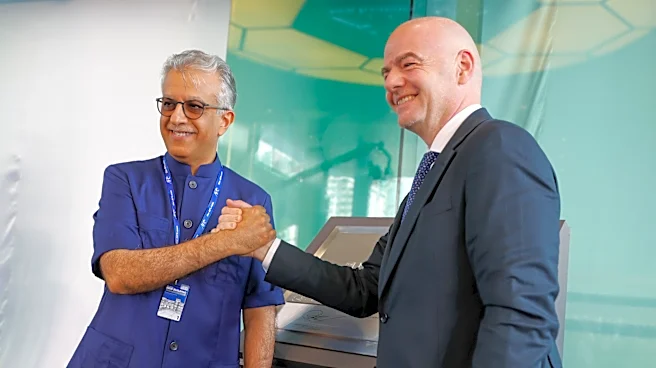
The Union of European Football Associations (UEFA) has publicly declared a loss of confidence in FIFA President Gianni Infantino following a controversial proposal to sell private stakes in the World Cup and other major tournaments. This plan, which involved
setting up a subsidiary with private equity investment to control commercial and operational rights, faced significant backlash. UEFA criticized the lack of transparency and the potential threat to the governance of the sport. Despite FIFA's withdrawal of the plan, UEFA's statement highlighted dissatisfaction with Infantino's leadership, emphasizing the need for accountability and transparency. The controversy has led to the resignation of Carlos Cordeiro, a senior adviser to Infantino, who opposed the plan.
Why It's Important?
This development is significant as it underscores the tension between FIFA and UEFA, two of the most influential bodies in global soccer. The proposed financing plan raised concerns about the commercialization of the sport and the potential erosion of its governance. UEFA's strong stance reflects broader discontent within the soccer community and could influence future governance and financial strategies within FIFA. The situation also highlights the challenges faced by Infantino as he seeks re-election, with his leadership and decision-making under scrutiny. The outcome of this conflict could have lasting implications for the management and commercial strategies of international soccer tournaments.
What's Next?
In response to the controversy, UEFA plans to collaborate with its associations and other confederations to prevent similar situations in the future. This includes developing strategies to ensure transparency and consultation in decision-making processes. Infantino, on the other hand, aims to engage with stakeholders to rebuild trust and address concerns. The upcoming FIFA presidential election will be a critical juncture, as Infantino's leadership and the organization's direction will be evaluated by member associations. The resolution of this issue will likely shape the future governance and commercial strategies of FIFA.