





What's Happening?
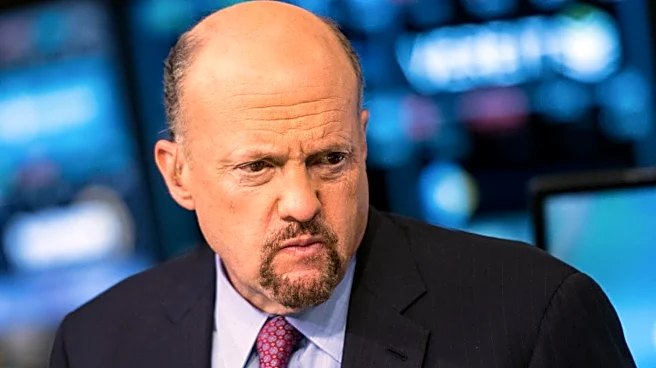
CNBC's Jim Cramer has declared the 'Magnificent Seven' tech stocks—Apple, Amazon, Alphabet, Meta, Microsoft, Nvidia, and Tesla—a generational buying opportunity, asserting they are finally cheap. This assessment comes as these companies are investing
heavily in AI infrastructure, which has led to depressed free cash flow and a market that has been hesitant to credit them for these long-term investments. Cramer's argument is that the substantial capital expenditure (capex) will eventually convert into significant free cash flow growth, making current prices attractive. He specifically highlights Amazon and Alphabet as having the cleanest cases for investment, citing Amazon Web Services' (AWS) growth and Alphabet's Google Cloud expansion and Gemini AI traction.
Why It's Important?
Cramer's call signals a potential shift in investor sentiment towards these major tech companies, which have been under scrutiny for their massive AI-related spending. The market's current skepticism about the immediate returns on AI investments has created what Cramer views as an undervaluation. If his prediction holds true, investors who buy now could see substantial gains as these AI infrastructure investments begin to yield profits. This perspective challenges the prevailing market focus on short-term free cash flow, urging a longer-term view on the strategic importance of AI. The performance of these companies, particularly Amazon and Alphabet, will serve as a bellwether for how the broader market values long-term AI infrastructure bets versus immediate financial metrics.
What's Next?
The coming quarters will be crucial in validating Cramer's thesis. The 'falsifiable test' lies in whether the significant capital expenditures by companies like Amazon and Alphabet translate into accelerated free cash flow growth, beyond just revenue growth. Investors will closely watch AWS and Google Cloud margins to see if they hold or expand as depreciation accelerates from new data centers. If these segments demonstrate strong monetization of their AI infrastructure, it could trigger a broader market re-evaluation of these tech giants. Conversely, if margins compress or free cash flow remains subdued, it would suggest the market's initial skepticism was justified, potentially leading to further price corrections for these stocks.
Beyond the Headlines
The debate surrounding the 'Magnificent Seven' and their AI investments touches upon a fundamental tension in modern finance: the balance between short-term profitability and long-term strategic growth. The market's current 'AI capex anxiety' reflects a broader uncertainty about the timeline and magnitude of returns from AI. This situation also highlights the immense capital requirements for leading in the AI race, potentially creating a wider moat for these established tech giants against smaller competitors. Furthermore, the success or failure of these AI bets will not only impact their stock prices but also shape the future landscape of cloud computing, AI services, and various industries reliant on these technologies, influencing global economic competitiveness and technological advancement.