





What's Happening?
Marvell Technology Inc. is reportedly in advanced discussions to acquire Lumentum Holdings Inc., a prominent manufacturer of data-center optics. This potential acquisition, reported by Bloomberg on October 28, 2026, would merge a chip designer with a key
supplier of optical components essential for high-speed data transfer within artificial intelligence (AI) clusters. While specific financial terms, payment structures, or a definitive closing date have not been confirmed by either company, sources familiar with the matter suggest an announcement could be made as early as the following week. The discussions are private, and the news has already led to a positive market reaction for Lumentum's stock, indicating investor confidence in the credibility of the talks. This move aligns with a broader trend of increased investment in hardware that facilitates the connection and operation of AI accelerators, which are crucial for modern AI infrastructure.
Why It's Important?
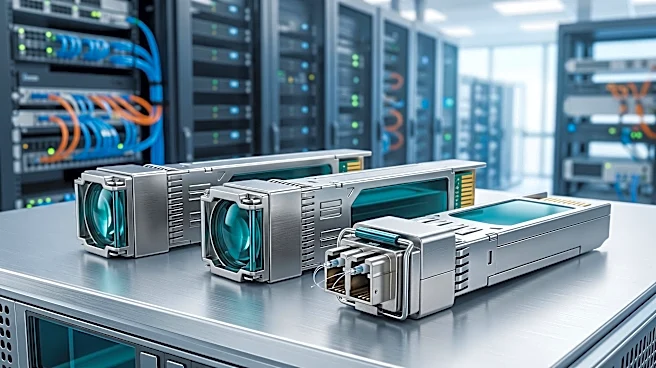
This acquisition is significant because it highlights the increasing strategic importance of optical interconnect technology in the rapidly expanding AI sector. As AI models become more complex and data-intensive, the demand for faster and more efficient data transfer within data centers is skyrocketing. Lumentum's expertise in lasers and optical components, which convert electrical signals into light for fiber optic transmission, is critical for enabling the high-bandwidth communication required by AI clusters. For Marvell, a company already involved in data-center networking silicon and optical digital signal processors, acquiring Lumentum could offer several strategic advantages. These include enhanced supply security for critical components, tighter design integration between its chips and optical sources, and the potential to capture additional profit margins by bringing a key part of its supply chain in-house. The deal reflects a broader industry recognition that the performance of AI infrastructure is not solely dependent on accelerators but also heavily relies on the underlying networking hardware.
What's Next?
If the acquisition proceeds as anticipated, an official announcement could be made within days. Following an announcement, the deal would likely undergo regulatory review and require shareholder approvals, a process that can take several months to complete. Customers and competitors in the AI networking and optical components markets will closely watch the implications of this merger. Other optical component suppliers might seek long-term contracts to secure their positions, while cloud providers and data center operators will assess how the combined entity's offerings might impact their supply chains and product roadmaps. The integration of Lumentum's manufacturing capabilities with Marvell's chip design expertise could lead to new, more integrated solutions for AI infrastructure, potentially accelerating advancements in co-packaged optics and photonic fabrics. However, risks such as antitrust scrutiny, integration challenges, and potential customer conflicts due to Marvell's existing relationships with Lumentum's competitors will need to be navigated.
Beyond the Headlines
The potential Marvell-Lumentum acquisition underscores a deeper shift in the technology industry, where companies are increasingly seeking to control more elements of the AI supply chain. This vertical integration strategy is driven by the intense demand for AI capabilities and the need to optimize performance, cost, and supply chain resilience. The move from pure chip design towards manufacturing of physical optical components, such as lasers and photonic parts, represents a significant strategic evolution for a company like Marvell. This trend could lead to a more consolidated market for AI infrastructure components, potentially impacting innovation dynamics and competitive landscapes. Furthermore, the emphasis on optimizing data transfer and reducing power consumption in AI data centers highlights growing concerns about the environmental and economic sustainability of large-scale AI deployments. The ability to efficiently move data using light rather than electricity is becoming a critical differentiator, influencing investment decisions and technological development across the industry.