


What's Happening?
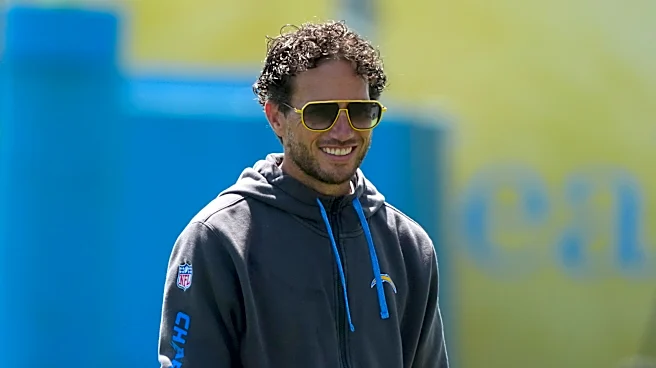
Los Angeles Chargers offensive coordinator Mike McDaniel is contemplating an unusual strategy for the team's left guard position, potentially rotating Trey Pipkins and Mekhi Becton rather than designating a single permanent starter. This approach challenges
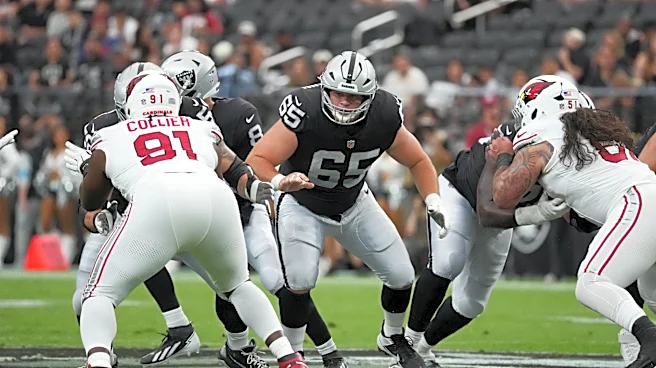
the traditional NFL emphasis on offensive line continuity, where five players are expected to operate as a cohesive unit throughout a game. McDaniel views this rotation as a way to ensure both players deliver 'full-effort plays' by managing their workload, especially given the significant increase in playing time from preseason to Week 1. While acknowledging the conventional argument for continuity, McDaniel expressed that he 'wouldn’t blink in that scenario,' suggesting a willingness to deviate from established norms if it benefits the team. This decision comes as McDaniel implements his offensive system in Los Angeles, requiring precise coordination across all positions.
Why It's Important?
This potential strategy by Mike McDaniel could significantly impact the Los Angeles Chargers' offensive performance and potentially influence coaching philosophies across the NFL. Offensive line continuity is widely considered crucial for effective blocking, communication, and protecting the quarterback. By rotating left guards, McDaniel is introducing a variable that could either enhance player performance by keeping them fresh or complicate the intricate timing and communication required for a high-functioning offense. If successful, this unconventional approach could provide a blueprint for other teams to manage player fatigue and maximize individual strengths, particularly in positions demanding high physical exertion. Conversely, if it leads to communication breakdowns or inconsistent play, it could reinforce the importance of traditional continuity. The outcome will be closely watched as it challenges a long-held tenet of football strategy.
What's Next?
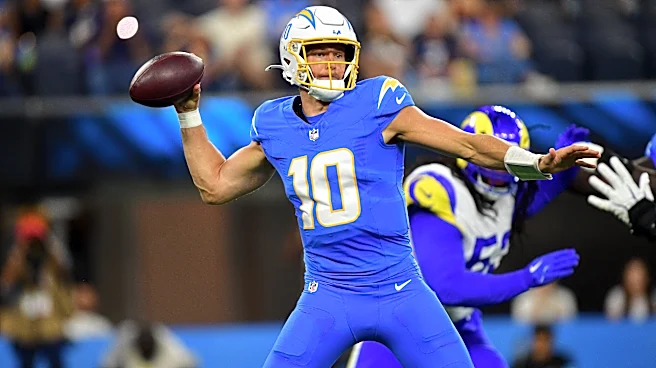
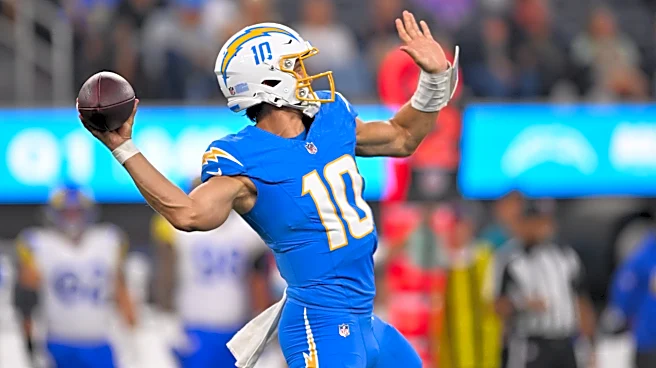
The Chargers will likely implement and test this rotational strategy for the left guard position as the NFL season progresses. The effectiveness of rotating Trey Pipkins and Mekhi Becton will be evaluated based on the offensive line's performance, particularly in pass protection for quarterback Justin Herbert and in establishing the run game. Reactions from players, coaches, and analysts will provide ongoing feedback on the viability of this unconventional approach. If the strategy proves successful, it could lead to further experimentation with rotational schemes in other offensive line positions or even inspire other NFL teams to reconsider their traditional views on continuity. Conversely, if challenges arise, McDaniel may need to adjust his strategy, potentially reverting to a more conventional single-starter model for the left guard position.
Beyond the Headlines
McDaniel's willingness to challenge the long-standing NFL norm of offensive line continuity highlights a broader trend in professional sports towards innovative player management and strategic flexibility. This move reflects a data-driven approach to maximizing player performance and mitigating fatigue, potentially extending careers and reducing injury risks. It also underscores the evolving role of offensive coordinators, who are increasingly expected to be strategic innovators rather than just implementers of established playbooks. The ethical dimension of this decision involves balancing individual player development and opportunity with the collective need for team cohesion. Furthermore, it could spark a wider debate within the sport about the optimal balance between specialized roles and versatile player utilization, potentially leading to new paradigms in team construction and game-day management.