




What's Happening?
Sheetak, a manufacturer of thermoelectric cooling solutions, is expanding its production capabilities and hiring additional engineers at its Austin facility. This expansion is driven by the increasing demand for localized, chip-scale cooling within AI
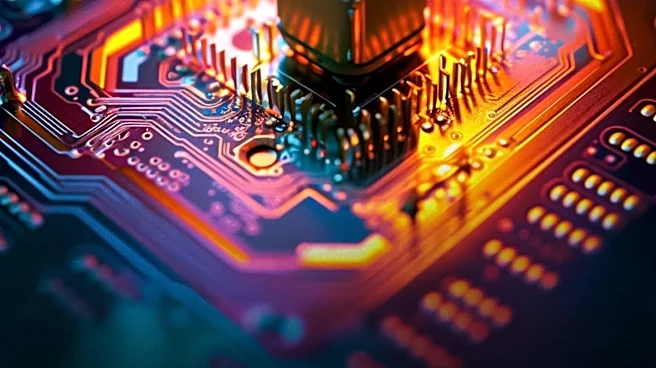
data centers. The core issue stems from the fact that optical components, such as lasers and optical engines in network transceivers, operate within extremely narrow temperature windows. Even a slight temperature fluctuation of one degree Celsius can cause a distributed-feedback laser to drift, potentially corrupting data links. Traditional cooling methods, like chilled-water loops or rack fans, are insufficient to address this localized heat problem within the optical components themselves. Sheetak's µCENTUM™ micro-TEC line offers compact modules, starting at 3.6 x 4.7mm, that can be mounted directly onto transceiver and photonic packages. These modules are designed to maintain temperature within ±0.01°C under closed-loop control, with rapid correction times measured in seconds. The company also collaborates with developers of optical transceivers and data center optical infrastructure to create custom thermoelectric solutions tailored to specific package, power budget, and performance requirements.
Why It's Important?
The growth of AI data centers is creating a critical need for advanced thermal management solutions, particularly at the chip level. The precision required for optical components in these data centers means that even minor temperature variations can lead to significant data corruption and system instability. This directly impacts the reliability and performance of AI infrastructure, which relies heavily on high-speed, error-free data transfer. Sheetak's expansion signifies a growing recognition within the industry that traditional cooling approaches are no longer adequate for the demands of modern AI computing. By providing localized, highly precise cooling, Sheetak helps ensure the operational integrity of millions of optical components, thereby safeguarding the efficiency and accuracy of AI operations. This development is crucial for companies investing in AI, as it directly addresses a fundamental challenge in scaling and maintaining high-performance computing environments. Without effective chip-scale cooling, the potential of AI data centers could be significantly hampered by thermal limitations and data integrity issues.
What's Next?
Sheetak plans to continue adding engineers to its Austin headquarters, focusing on thermal design and manufacturing, to further bolster its U.S.-based workforce. This expansion will enable the company to meet the escalating demand for its thermoelectric coolers, generators, controllers, and integrated thermal assemblies across various sectors, including photonics, telecommunications, aerospace, defense, computing, and medical markets. The company's vertically integrated model, which includes thermoelectric materials, device engineering, and manufacturing in Austin, supports ITAR-aligned programs and domestic-sourcing requirements, indicating a strategic focus on national security and supply chain resilience. As AI data centers continue to proliferate and demand for high-performance optical components grows, Sheetak is positioned to play an increasingly vital role in ensuring the stability and efficiency of these critical infrastructures. Future developments may include further miniaturization of cooling solutions and integration with advanced packaging platforms to manage heat more effectively within optical components.
Beyond the Headlines
The increasing reliance on localized cooling solutions like those offered by Sheetak highlights a broader trend in high-performance computing: the shift from macro-level thermal management to micro-level precision. As chip densities increase and power consumption rises, the ability to precisely control temperature at the component level becomes paramount. This not only impacts the immediate performance and reliability of data centers but also has implications for energy efficiency and environmental sustainability. By preventing thermal failures and optimizing component operation, these advanced cooling technologies can reduce energy waste associated with inefficient cooling and extend the lifespan of expensive hardware. Furthermore, the emphasis on domestic manufacturing and ITAR compliance underscores the strategic importance of these technologies for national security and technological independence, particularly in critical sectors like defense and aerospace. The demand for such specialized cooling also points to the growing complexity of modern technological infrastructure, where even seemingly minor physical parameters can have profound effects on overall system performance.