



What's Happening?
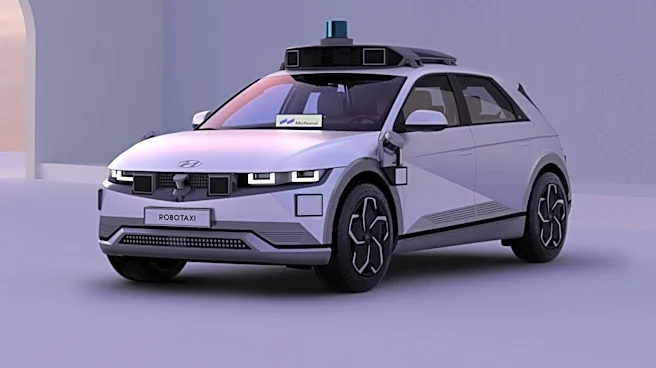
Tesla is preparing to launch sales of its Cybercab robotaxi by the end of the year, a move that could introduce a significant new revenue stream for the company. The Cybercab is an autonomous vehicle designed with two seats, no steering wheel, pedals,
or mirrors, and is a key component of Tesla's robotaxi ambitions. While Tesla plans to operate its own fleet of Cybercabs, it also intends to sell these vehicles to consumers, allowing them to operate their own fleets. This strategy could generate revenue through commissions on rides booked via Tesla's network, Full Self-Driving (FSD) subscription fees, and potentially repair and maintenance services. The company anticipates that Cybercabs could generate substantially more revenue over their useful life compared to traditional EV sales, with estimates suggesting thousands of dollars annually per vehicle.
Why It's Important?
This initiative marks a pivotal moment for Tesla, as it seeks to diversify its revenue beyond electric vehicle sales, which have faced recent uncertainties. The robotaxi business, particularly through the sale of Cybercabs, represents a high-growth opportunity that could significantly impact Tesla's financial performance. The potential for recurring revenue from commissions and FSD subscriptions offers a more stable and potentially higher-margin business model compared to one-time car sales. This move could also accelerate the adoption of autonomous driving technology, transforming urban transportation and creating new economic opportunities in the ride-sharing sector. Investors are closely watching this development, as it could be a major catalyst for Tesla's stock rebound, alongside other growth drivers like Megapack energy storage and the Optimus humanoid robot.
What's Next?
The launch of Cybercab sales by year-end will be a critical test for Tesla's robotaxi strategy. The company will need to successfully navigate regulatory approvals for autonomous vehicles and build out the necessary infrastructure to support both its own fleet and consumer-operated Cybercabs. The market's reception to purchasing and operating autonomous taxis will determine the scale of this new revenue stream. Tesla's ability to generate commissions from rides and increase FSD subscription rates will be key performance indicators. Furthermore, the potential for selling Cybercabs to large corporations for various purposes, such as package delivery, could open additional market segments and further expand Tesla's reach in the autonomous services industry.
Beyond the Headlines
The introduction of Cybercabs could have profound implications for the future of transportation and urban planning. It could lead to a reduction in private car ownership, alleviate traffic congestion, and lower transportation costs for consumers. However, it also raises complex ethical and legal questions regarding liability in autonomous accidents, job displacement for human drivers, and data privacy. The success of Tesla's robotaxi venture could set a precedent for other companies in the autonomous vehicle space, accelerating the shift towards a more automated and service-oriented transportation ecosystem. This development signifies a long-term shift in how people interact with vehicles, moving from ownership to on-demand services, and could reshape the entire automotive and logistics industries.