






What's Happening?
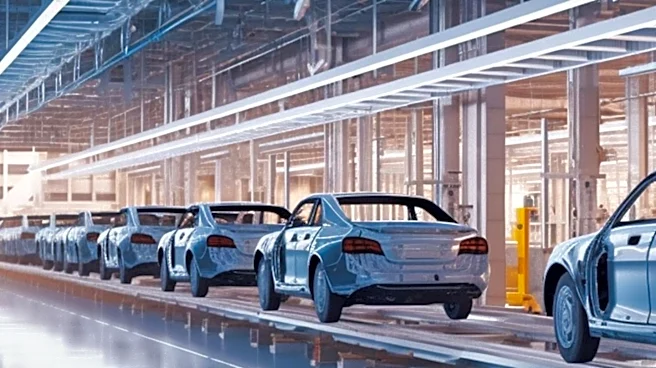
President Donald Trump has indicated he would not oppose Chinese automakers establishing assembly plants within the United States, provided these facilities employ American workers. This stance contrasts with his opposition to Chinese companies manufacturing
vehicles in Mexico for subsequent export into the U.S. market. The President's comments come amidst ongoing pressure from American automakers, who are urging Congress to enact permanent measures to block Chinese vehicles from the U.S. market. Currently, existing U.S. restrictions and tariffs already limit the access of Chinese-made automobiles. President Trump's position suggests a preference for domestic job creation and manufacturing, even if the companies are foreign-owned, over cross-border manufacturing that could circumvent existing trade barriers.
Why It's Important?
President Trump's conditional openness to Chinese automakers building plants in the U.S. represents a nuanced approach to trade and manufacturing policy. It signals a prioritization of American jobs and domestic production, aligning with his 'America First' economic agenda. This could potentially lead to significant foreign direct investment in the U.S. manufacturing sector, creating new employment opportunities and boosting local economies where these plants might be established. However, it also presents a complex challenge for American automakers, who are simultaneously pushing for stricter barriers against Chinese vehicles. The policy could be seen as a way to leverage foreign capital and expertise while ensuring benefits for the American workforce, rather than outright protectionism. It also highlights the administration's focus on the location of production rather than solely the origin of ownership, potentially reshaping global automotive supply chains.
What's Next?
Following President Trump's statements, Chinese automakers interested in the U.S. market may begin to evaluate the feasibility and strategic advantages of establishing assembly plants within the United States. This could involve assessing potential locations, labor availability, and regulatory environments. American automakers and their lobbying groups will likely continue to advocate for policies that protect domestic manufacturers, potentially intensifying their efforts in Congress to block Chinese vehicle imports, regardless of their assembly location. The administration may need to clarify specific guidelines or incentives for foreign companies looking to invest in U.S. manufacturing, particularly concerning job creation metrics and compliance with existing trade laws. This development could also influence ongoing trade discussions between the U.S. and China, potentially opening new avenues for economic engagement focused on domestic investment.
Beyond the Headlines
President Trump's position on Chinese automakers building plants in the U.S. delves into the broader debate about globalization, national economic interests, and the future of manufacturing. It suggests a strategic shift from simply blocking foreign goods to encouraging foreign investment that directly benefits the American workforce. This approach could lead to a more integrated global economy where foreign companies play a direct role in domestic production, blurring the lines between 'foreign' and 'domestic' industries. Ethically, it raises questions about the balance between protecting national industries and fostering international investment that creates jobs. Legally, it could necessitate new frameworks for foreign ownership and labor standards. Culturally, it might challenge traditional perceptions of economic nationalism, as foreign brands become direct employers within American communities, potentially leading to a more complex and interdependent global manufacturing landscape.