





What's Happening?
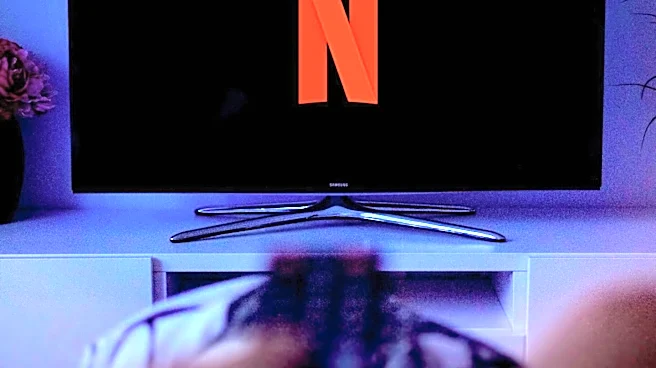
Netflix shares are experiencing downward pressure, trading approximately 0.3% lower in Monday’s premarket session, following a 4.7% decline on Friday. This downturn comes after Wells Fargo downgraded Netflix to 'Underweight' and reduced its price target
from $80 to $57. The bank cited weakening engagement metrics as the primary reason for the downgrade. According to analyst Steven Cahall, viewing hours across Netflix’s top 100 original titles are projected to fall by about 21% year-over-year during the second half of 2026. Additionally, viewing hours per subscriber could decline by roughly 4%. Wells Fargo also noted Netflix's expanding focus on diverse content areas such as gaming, documentaries, reality shows, live content, and video podcasts. Despite the broader Nasdaq 100 futures showing a rise of around 1.2%, Netflix's stock remains under pressure as markets continue to process the Wells Fargo assessment.
Why It's Important?
This development is significant for the streaming industry and the broader U.S. stock market, particularly for investors in technology and entertainment sectors. A downgrade from a major financial institution like Wells Fargo can influence investor sentiment and lead to further stock price volatility for Netflix. Weakening engagement metrics, if they materialize as projected, could signal a maturing market for streaming services or increased competition impacting subscriber retention and growth. For Netflix, declining viewing hours per subscriber and across top titles could translate into increased churn and pressure on margin expansion into 2027, directly affecting its financial performance and long-term valuation. The company's strategy to diversify into gaming and other content forms might be a response to these engagement challenges, but its effectiveness remains to be seen. This situation highlights the constant need for streaming platforms to innovate and maintain subscriber interest in a highly competitive landscape.
What's Next?
The immediate focus for Netflix and its investors will be the company's third-quarter results, scheduled for October 20. These results will be closely scrutinized for insights into growth, margins, and content performance, providing a clearer picture of the impact of the engagement metrics cited by Wells Fargo. Depending on these results, Netflix may need to adjust its content strategy, marketing efforts, or subscription models to address potential subscriber churn and improve engagement. The market will also be watching for any further analyst revisions or competitive moves within the streaming sector. Should the reported metrics align with Wells Fargo's projections, Netflix could face continued stock pressure and increased scrutiny regarding its future growth prospects and profitability. Conversely, stronger-than-expected results could alleviate some of the current concerns.
Beyond the Headlines
The Wells Fargo downgrade and the underlying concerns about weakening engagement metrics point to a deeper trend within the digital entertainment landscape: the challenge of sustained audience attention. As streaming services proliferate and content libraries expand, consumers face an overwhelming choice, leading to potential 'streaming fatigue' or a more fragmented viewing experience. This could force platforms like Netflix to rethink their content acquisition and production strategies, moving beyond sheer volume to focus on highly engaging, 'must-watch' content that can retain subscribers. The shift towards gaming, documentaries, and live content by Netflix suggests an acknowledgment of this evolving consumer behavior, aiming to capture broader segments of leisure time. This trend could also impact content creators and production studios, as demand might shift towards specific genres or formats that promise higher engagement, potentially altering the economics of content creation in the long run.