







What's Happening?
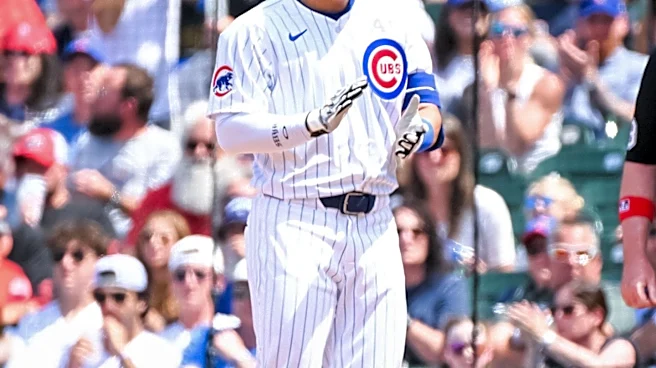
The Chicago Cubs have established a new franchise record by scoring 30 unanswered runs across three consecutive games. This achievement surpasses their previous record of 29 unanswered runs, which occurred in 1876 and was matched from May 11-13, 1969.
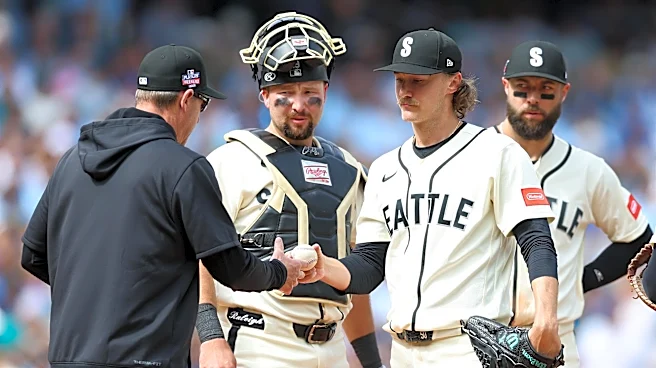
The streak began on Sunday when the Cubs, after falling behind 2-0 against the Seattle Mariners, rallied to win 19-2. They continued their dominant performance on Monday, shutting out the Arizona Diamondbacks 7-0. The streak extended into Tuesday's game against the Diamondbacks, where they took a 4-0 lead. However, the Diamondbacks eventually scored three runs in the eighth inning, ending the Cubs' scoring run, and ultimately won the game 5-4. According to the Elias Sports Bureau, the 1969 streak involved an 8-0 shutout against the San Francisco Giants, followed by 2-0 and 19-0 victories over the San Diego Padres.
Why It's Important?
This new franchise record highlights a significant offensive surge for the Chicago Cubs, demonstrating a period of exceptional team performance in Major League Baseball. Such streaks can generate considerable fan engagement and media attention, potentially boosting team morale and public interest in the sport. For the Cubs organization, it marks a historical milestone, providing a benchmark for future teams and adding to the club's storied legacy. From a broader perspective, these types of records contribute to the rich statistical tapestry of baseball, offering data points for analysts and historians to compare eras and team capabilities. While a single streak doesn't guarantee long-term success, it can indicate a team's potential and the effectiveness of its current roster and coaching strategies, influencing perceptions among fans, investors, and prospective players.
What's Next?
Following this record-setting offensive display, the Chicago Cubs will aim to maintain their momentum, despite the streak ending with a loss. The focus will likely shift to sustaining consistent performance, particularly in both offense and pitching, to translate these individual game successes into a stronger overall season record. The team will need to analyze how to replicate the offensive efficiency shown during the streak while addressing any vulnerabilities that led to the streak's conclusion. For fans and analysts, the coming games will be crucial in determining if this record-breaking period was an anomaly or a sign of a more sustained improvement in the team's capabilities. The Cubs' management will also be evaluating player performances during this period to inform future roster decisions and strategic planning.
Beyond the Headlines
Beyond the immediate statistical achievement, this record reflects the dynamic and often unpredictable nature of baseball, where periods of extraordinary performance can emerge. It underscores the psychological aspect of sports, as a team's ability to score unanswered runs can demoralize opponents and build significant confidence within the team. This kind of historical record also serves as a cultural touchstone for the franchise, connecting current players and fans to the team's past achievements and contributing to the narrative of the club. It can inspire future generations of players and fans, becoming part of the lore that defines the Chicago Cubs. The comparison to historical streaks from 1876 and 1969 also highlights the enduring nature of baseball records and the continuous pursuit of excellence within the sport.