








What's Happening?
American Airlines is significantly expanding its partnership with Starlink, a satellite internet service operated by SpaceX, to install high-speed Wi-Fi on over 1,000 of its mainline aircraft. This move builds on a previous announcement in May to equip
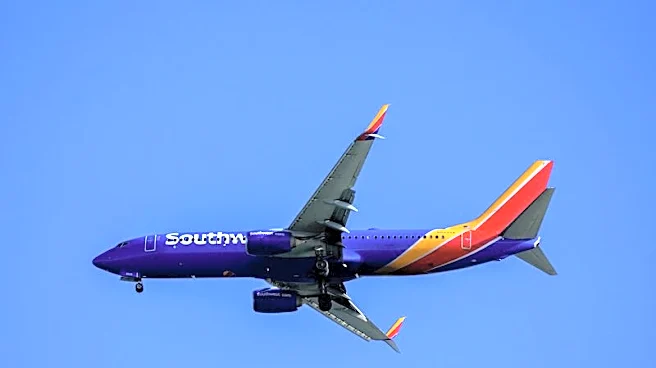
more than 500 Airbus aircraft with Starlink. The expanded installation will now include American's widebody aircraft, such as the Boeing 777-300ER, which are used for long-haul international flights. The installations are scheduled to commence early next year. Starlink utilizes low-Earth orbit satellite constellation technology to deliver high-speed internet, supporting activities like streaming, online gaming, and video calls, according to the company's website. This initiative reflects a broader trend in the airline industry, with other carriers like Southwest Airlines, United Airlines, and Frontier also adopting Starlink to meet increasing customer demand for reliable in-flight connectivity.
Why It's Important?
This expansion by American Airlines is a significant development for the U.S. airline industry and its passengers. The integration of Starlink's high-speed internet across a substantial portion of American's fleet will dramatically improve the in-flight experience, addressing a long-standing customer desire for dependable connectivity. For passengers, this means the ability to stream content, engage in online gaming, participate in video calls, and conduct business tasks seamlessly while traveling. This enhanced connectivity could become a key differentiator for American Airlines in a competitive market, potentially influencing passenger choice and loyalty. From an operational standpoint, reliable internet access can also support airline crew functions and potentially open doors for future in-flight innovations. The move also highlights the growing influence of satellite internet technology, particularly Starlink, in transforming various sectors, including commercial aviation, by providing robust internet solutions in previously underserved or challenging environments.
What's Next?
The installation of Starlink on American Airlines' aircraft is set to begin early next year. As these installations progress, passengers can anticipate a gradual rollout of the enhanced Wi-Fi service across more routes and aircraft types. Other U.S. airlines, such as Southwest Airlines, which aims to have Starlink on over 300 aircraft by year-end, and others like United and Frontier, are also in various stages of adopting this technology. This suggests a future where high-speed, reliable in-flight internet becomes a standard expectation rather than a premium offering across the industry. The success and passenger feedback from these initial rollouts will likely influence further adoption and investment in satellite internet solutions by other carriers. Additionally, the increased availability of robust connectivity could spur the development of new in-flight entertainment and service offerings, further enhancing the travel experience.
Beyond the Headlines
The widespread adoption of Starlink by major U.S. airlines like American Airlines signifies a broader shift in how connectivity is perceived and delivered, not just in aviation but potentially across other mobile sectors. This move underscores the increasing reliance on satellite technology to bridge connectivity gaps and provide high-performance internet in challenging environments. Beyond the immediate benefits for passengers, this trend could have long-term implications for the telecommunications industry, potentially accelerating the development and deployment of satellite internet infrastructure globally. It also highlights the strategic importance of companies like SpaceX in providing critical infrastructure that enables various industries to innovate and meet evolving consumer demands. The competition among satellite internet providers to secure contracts with major airlines could also drive further advancements in satellite technology and service efficiency, ultimately benefiting a wider range of users and applications.