



What's Happening?
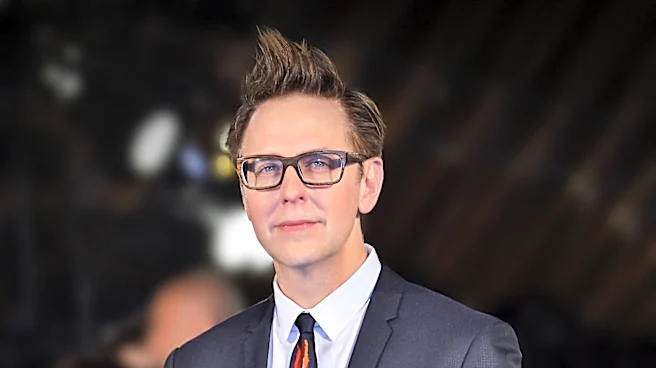
DC Studios co-chair James Gunn has clarified the timeline placement of the upcoming HBO series 'The People v. Gorilla Grodd' within the DC Universe. Contrary to earlier speculation, Gunn stated that the show's primary present-day narrative occurs after
the film 'Man of Tomorrow.' This clarification was made on Threads while Gunn was working on 'Man of Tomorrow.' The series, described as a true-crime parody, will feature Daily Planet reporter Jimmy Olsen investigating supervillain-related cases, with Jimmy Tatro portraying Grodd. Set photos have shown Grodd in various settings, including what appears to be Metropolis University, wearing different attire, suggesting the series will jump through time to explore Grodd's past, including whether he was wrongly convicted of murdering his father, the King of Gorilla City. This announcement follows a report indicating that several previously announced DCU projects, such as 'Waller,' 'Paradise Lost,' and 'Booster Gold,' are no longer in active development, making 'The People v. Gorilla Grodd' the only new DCU television series currently moving forward at HBO.
Why It's Important?
This clarification from James Gunn is important for maintaining narrative consistency and managing audience expectations within the evolving DCU. By firmly placing 'The People v. Gorilla Grodd' after 'Man of Tomorrow,' Gunn provides a clear chronological anchor for fans, which is crucial for a shared cinematic and television universe. The decision to proceed with 'The People v. Gorilla Grodd' while other projects are stalled highlights a strategic shift in DC Studios' television development. This could indicate a focus on unique, genre-bending narratives, as 'The People v. Gorilla Grodd' is described as a true-crime parody. The success or failure of this series could influence future greenlighting decisions for DCU television content, potentially paving the way for more experimental storytelling or reinforcing a more conservative approach if it underperforms. For HBO, this series represents a significant investment in the DCU, and its performance will be closely watched as the network navigates its content strategy in a competitive streaming landscape.
What's Next?
Audiences can expect 'The People v. Gorilla Grodd' to be released sometime after 'Man of Tomorrow.' The series is currently in production, with filming underway. The true-crime parody format suggests a non-linear narrative, which will explore Grodd's past and Jimmy Olsen's investigation. The performance of 'The People v. Gorilla Grodd' will likely be a key factor in determining the future of DCU television projects on HBO. With HBO boss Casey Bloys indicating no other DCU shows are in active development beyond this one, the series carries the weight of potentially being the sole new DCU television offering for the foreseeable future. Its reception could influence whether DC Studios and HBO decide to revive previously shelved projects or greenlight entirely new ones. Fans will be looking for further details on the series' release date and how its unique premise integrates with the broader DCU narrative.
Beyond the Headlines
The strategic decision to prioritize 'The People v. Gorilla Grodd' while other DCU projects are paused suggests a potential shift in how DC Studios approaches its television content. This move could indicate a willingness to explore more unconventional narratives and formats, moving away from traditional superhero fare. The 'true-crime parody' genre for a character like Gorilla Grodd is a significant departure and could signal a broader trend of genre experimentation within the DCU. This approach might aim to attract a wider audience beyond traditional comic book fans, leveraging the popularity of true-crime documentaries. However, it also carries the risk of alienating core fans who might prefer more conventional adaptations. The success of this series could set a precedent for future DCU projects, encouraging more creative risks and diverse storytelling, or, conversely, if it struggles, it might lead to a more cautious strategy focusing on established character interpretations. This also reflects the ongoing challenge for shared universes to balance interconnectedness with standalone creative vision.