

What's Happening?
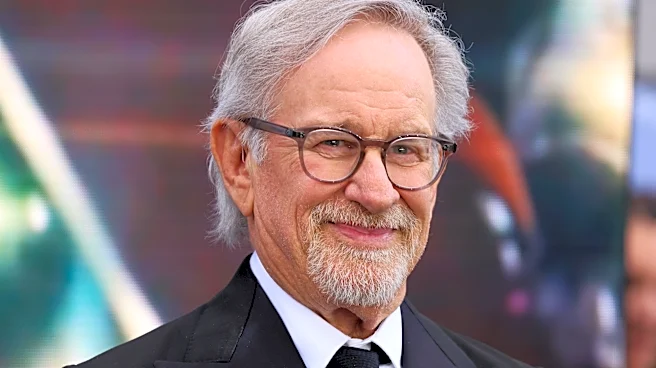
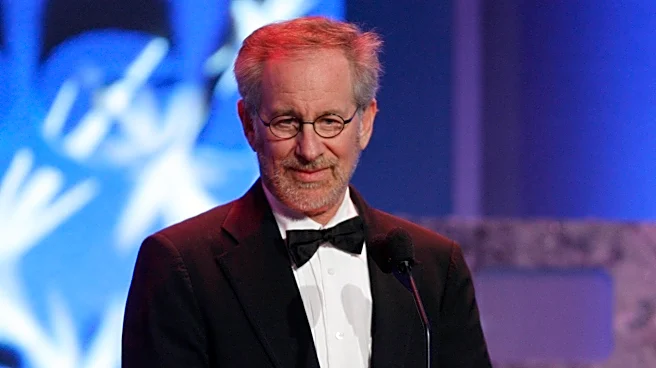
In 1993, director Steven Spielberg released two vastly different yet highly successful films: the blockbuster 'Jurassic Park' and the critically acclaimed 'Schindler's List'. This simultaneous release showcased Spielberg's versatility as a filmmaker,
moving from a dinosaur-themed mega-hit to a profound historical drama. Liam Neeson, who starred as Oskar Schindler in 'Schindler's List', reflected on his performance, expressing self-criticism despite the film's widespread acclaim and his Academy Award nomination. Neeson felt he didn't 'own the part' and that Spielberg's precise direction, down to how he smoked a cigarette, made him feel like a 'puppet'. Despite Neeson's personal reservations about his portrayal, the film was a monumental success, earning seven Oscars, including Best Picture, and solidified Neeson's status as a leading actor.
Why It's Important?
Spielberg's ability to deliver two such distinct and impactful films in the same year is a significant moment in cinematic history, demonstrating a rare blend of commercial acumen and artistic depth. 'Jurassic Park' revolutionized special effects and set new box office standards, while 'Schindler's List' brought a harrowing historical event to a global audience with profound emotional resonance, earning critical praise and numerous awards. This dual success underscored Spielberg's influence on both popular culture and serious filmmaking. Neeson's candid reflections on his performance, despite its critical reception, highlight the internal struggles actors can face even in their most celebrated roles, offering insight into the creative process and the pursuit of authenticity in acting. The film's enduring legacy continues to educate and move audiences worldwide.
What's Next?
While both films are now historical benchmarks in Spielberg's career, their continued presence in film studies and public discourse ensures their ongoing relevance. 'Schindler's List' remains a crucial educational tool for understanding the Holocaust, frequently screened in schools and memorial events. 'Jurassic Park' continues to inspire new generations of filmmakers and audiences with its groundbreaking visual effects and storytelling, leading to numerous sequels and spin-offs. The critical discussions surrounding Neeson's performance, despite his personal feelings, contribute to the ongoing analysis of acting methods and directorial influence in cinema. Both films are firmly established in the canon of classic American cinema, influencing future productions and directorial approaches.
Beyond the Headlines
The simultaneous release of 'Jurassic Park' and 'Schindler's List' in 1993 also represents a pivotal moment in Spielberg's own artistic journey, showcasing his capacity to balance commercial entertainment with deeply personal and historically significant narratives. This period marked a shift in how Spielberg was perceived, moving beyond just a blockbuster director to an artist capable of profound social commentary. The contrast between the two films also highlights the diverse roles cinema plays in society: as pure escapism and as a powerful medium for historical remembrance and moral reflection. Neeson's struggle with his performance, despite external validation, touches upon the subjective nature of artistic satisfaction and the often-unseen pressures faced by actors in bringing complex characters to life, particularly those based on real historical figures.