






What's Happening?
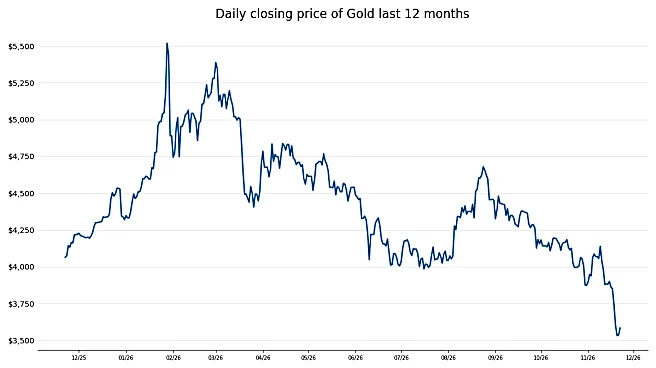
Global Gold Investments, a Certified Authorized Dealer of precious metals, is cautioning retirement savers about the significant risk posed by high markups on gold and silver, even as spot gold prices have fallen. As of November 19, spot gold traded at
$3,735.72 an ounce, approximately 33% below its record high of $5,589.38 reached on January 28, 2026. Jimmie West Jr., President and CEO of Global Gold Investments, emphasizes that the premium paid above the metal's worth can be more detrimental to investors than market fluctuations. Federal regulators have previously taken action against dealers for overcharging, with one case in April 2024 resulting in a federal court ordering a firm to pay over $56 million for charging markups of 100% to 130% on coins sold through self-directed IRAs. At a 100% markup, gold would need to double in value to about $7,470 an ounce for the buyer to break even, significantly higher than its January 2026 peak.
Why It's Important?
This warning is crucial for U.S. retirement savers considering investments in physical gold and silver, particularly through Gold IRAs. The practice of high markups can severely erode investment returns, making it difficult for individuals to realize profits even if the underlying metal's price increases. The Commodity Futures Trading Commission's past actions against firms for deceptive markup practices highlight a systemic issue within the precious metals investment sector that can disproportionately affect unsuspecting investors. For retirement savers, who often seek stability and long-term growth, hidden or excessive fees can undermine their financial planning and security. The advice from Global Gold Investments underscores the need for due diligence and transparency when purchasing precious metals, especially given their role as a diversification tool in retirement portfolios.
What's Next?
Global Gold Investments recommends that potential buyers of gold or silver, particularly for retirement accounts, ask five key questions before making a purchase. These include inquiring about the current spot price and total premium, confirming IRA eligibility, identifying the IRA custodian and depository, understanding annual custodial and storage fees, and knowing the buy-back price. This proactive approach aims to empower consumers to protect themselves from predatory pricing. The company also advises walking away from any dealer unwilling to provide their markup in writing. This guidance suggests a continued focus on consumer education and transparency within the precious metals market to safeguard retirement savings.
Beyond the Headlines
The issue of high markups in precious metals extends beyond mere financial loss; it touches upon ethical considerations in investment sales and the broader regulatory environment designed to protect consumers. The discrepancy between advertised markups and actual charges, as seen in the federal court case, points to a potential lack of transparency and deceptive practices that can exploit investors' trust. This situation highlights the ongoing challenge for regulators to effectively monitor and enforce fair practices in specialized investment markets. For individuals, it underscores the importance of financial literacy and skepticism, particularly when dealing with complex or less regulated investment products, to avoid falling victim to schemes that prioritize dealer profit over client benefit.