





What's Happening?
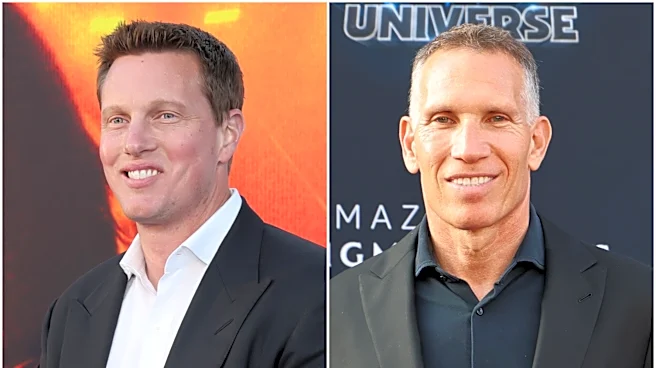
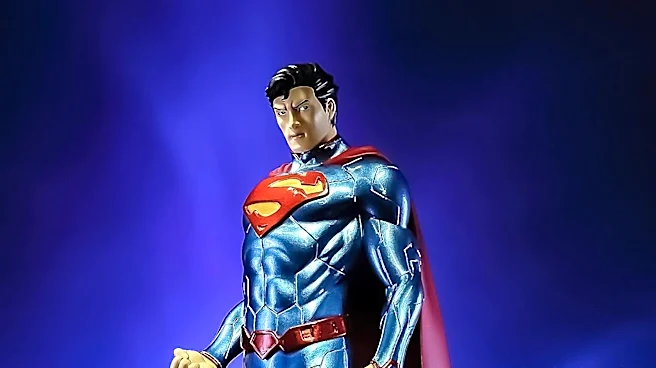
The DC Cinematic Universe (DCU) is undergoing a significant reboot, spearheaded by DC Studios co-CEO James Gunn. This new iteration aims to create a cohesive shared film reality where filmmakers can develop distinct stories and tones while maintaining
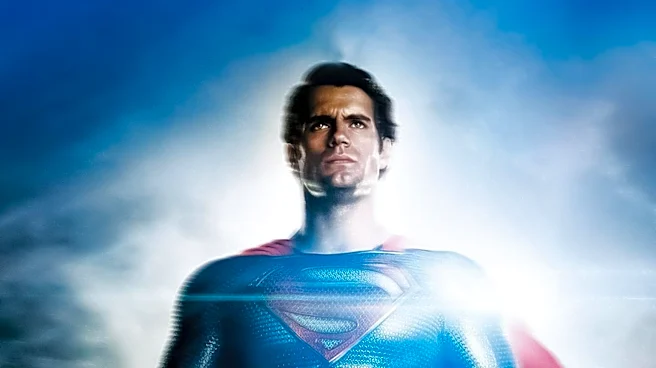
shared characters, plot lines, and settings. The reboot effectively follows the conclusion of the previous attempt to create a unified DC film universe, which began with Zack Snyder’s 'Man of Steel' and ended with 'The Flash' in 2023. The new DCU is already taking shape with several films and shows available, and a new 'Superman' film is slated for release in 2025. This reboot continues a long-standing trend within DC Comics of re-establishing continuities and character narratives, a practice that has occurred informally for decades and formally since 1985’s 'Crisis on Infinite Earths.'
Why It's Important?
This reboot of the DCU holds significant implications for the entertainment industry, particularly for Warner Bros. Discovery, which owns DC Comics. A successful reboot could revitalize interest in DC properties, leading to increased box office revenue, streaming subscriptions, and merchandise sales. Conversely, a poorly received reboot could further alienate fans and impact the studio's financial performance. For audiences, it means a fresh start with beloved characters, potentially offering new interpretations and storylines. The decision to reboot reflects the ongoing challenge of maintaining narrative consistency and audience engagement in expansive cinematic universes. The success of this new approach could influence how other major studios manage their intellectual properties and cinematic franchises in an increasingly competitive entertainment landscape.
What's Next?
The immediate future for the DCU involves the release of the new 'Superman' film in 2025, which is expected to be a cornerstone of this new cinematic reality. Further expansion of the universe is anticipated with upcoming projects such as HBO’s 'Lanterns' and James Watkins’ feature film 'Clayface.' While the new DCU is establishing its own continuity, some elements from previous iterations, like 'Peacemaker,' may retain relevance. However, other properties such as 'The Batman,' its sequel, and 'The Penguin' television series will continue to exist outside of the main DCU. The ongoing development and release of these interconnected and standalone projects will determine the trajectory and reception of this ambitious reboot.
Beyond the Headlines
The continuous reboots within the DC universe, both in comics and now in film, highlight a broader cultural phenomenon of narrative reinvention and the challenges of maintaining long-running fictional universes. This practice reflects a tension between honoring established lore and adapting to contemporary audience expectations and storytelling trends. Ethically, it raises questions about fan loyalty and the potential for 'reboot fatigue' among consumers. Legally, it involves complex intellectual property management and creative control. Culturally, these reboots can be seen as a reflection of societal shifts, as characters and their narratives are updated to resonate with new generations. The success or failure of this DCU reboot will offer valuable insights into the evolving dynamics of franchise management and audience engagement in the 21st century.