

What's Happening?
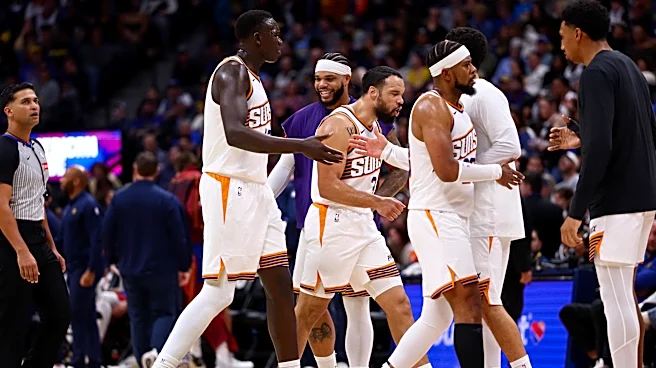
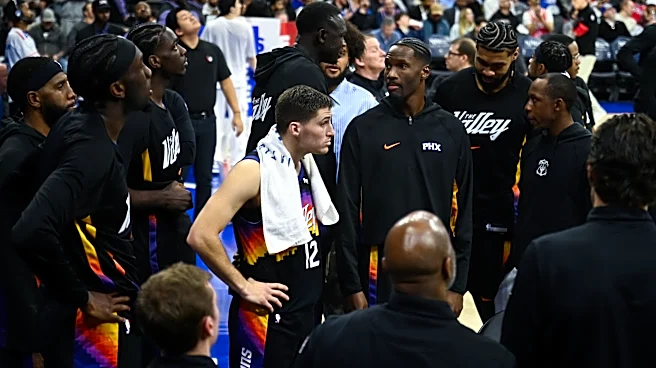
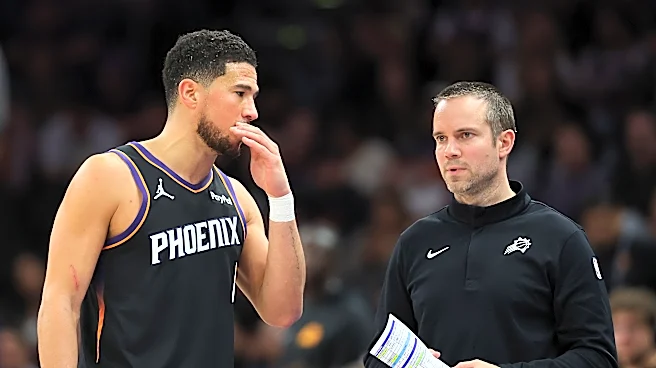
Phoenix Suns head coach Jordan Ott is facing significant challenges in managing the team's center position due to an injury to Mark Williams. Williams tore his left labrum in September, requiring surgery and disrupting the team's original plan for its
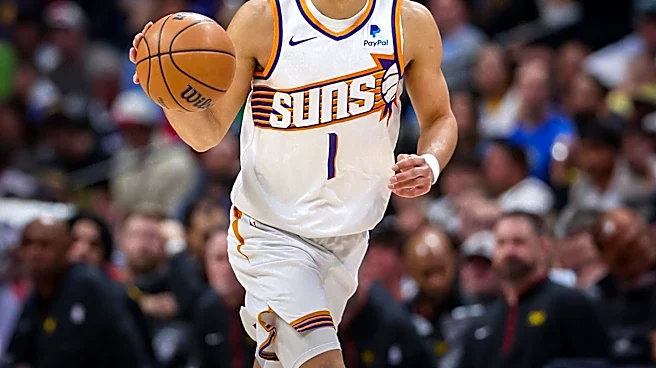
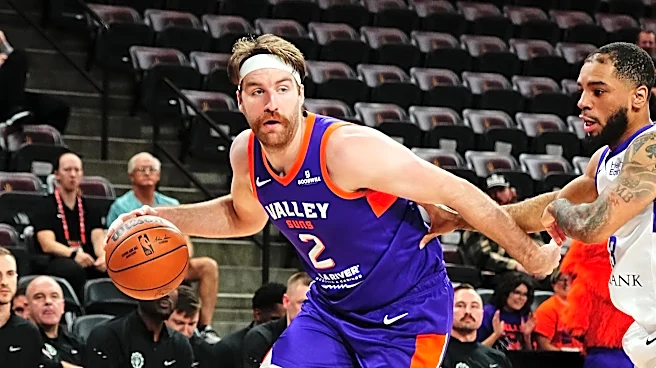
center rotation. The initial strategy involved Williams starting, Oso Ighodaro coming off the bench, and Khaman Maluach developing over the season. With Williams sidelined, Ott is now forced to manage 48 minutes of play each night using a combination of Ighodaro, Maluach, and small-ball lineups. This situation has led to scrutiny from some fans regarding Ighodaro's performance, particularly his offensive limitations, which opposing teams have exploited. Despite these challenges, Ighodaro contributes as a facilitator and screener, leading the team in screen assists.
Why It's Important?
The Suns' struggle at the center position directly impacts their overall team performance and strategic flexibility. The absence of a primary center like Mark Williams forces coach Ott to rely on less experienced players or unconventional lineups, which can create defensive vulnerabilities and offensive inefficiencies. Opposing teams are capitalizing on Oso Ighodaro's offensive limitations, allowing defenders to sag off him and clog the interior, making it harder for other Suns players to score. This situation highlights the critical importance of depth and injury preparedness in professional sports. The team's ability to adapt and develop its current center options, Ighodaro and Maluach, will be crucial for their success this season and in the long term, as it affects their competitive standing in the league.
What's Next?
Coach Ott will likely continue to experiment with different combinations of Ighodaro and Maluach, alongside small-ball lineups, to find the most effective strategy for the center position. The development of Khaman Maluach will be a key focus, as he is not yet considered ready for full starting responsibilities. Ighodaro's role in absorbing minutes and allowing Maluach to develop at a more measured pace will be critical. The team will need to address Ighodaro's offensive limitations, either through his own development or by adjusting offensive schemes to mitigate this vulnerability. The long-term recovery and return of Mark Williams will also be a significant factor in reshaping the team's center rotation in future seasons.
Beyond the Headlines
The situation with the Suns' center position underscores a broader trend in professional basketball where immediate results often overshadow long-term player development. The pressure from fans and media to see instant success can lead to rushed development paths for young players. In this case, Ighodaro's presence allows Maluach to develop without undue pressure, which could be beneficial for his career longevity and the team's future. The debate among fans about Ighodaro's value versus Maluach's potential also reflects differing philosophies on team building—whether to prioritize current contributions or future potential. This dynamic highlights the complex balance NBA teams must strike between winning now and investing in future talent.