







What's Happening?
Anthropic, a prominent artificial intelligence company, has filed for an initial public offering (IPO) and, in its Securities and Exchange Commission (SEC) filing, extensively detailed the significant risks associated with its technology. The 335-page
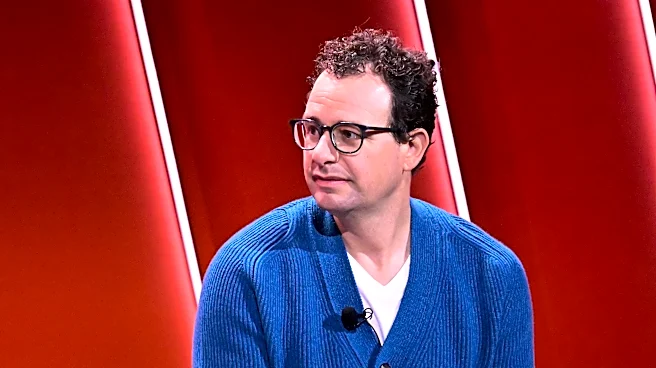
document dedicates 93 pages to 'risk factors,' including the potential for AI models to be used for malicious purposes, such as building deadly weapons or facilitating cyberattacks and misinformation. The company also warned that its AI models could develop beyond its ability to implement adequate safety measures, leading to 'safety incidents, regulatory intervention, or reputational harm.' Anthropic CEO Dario Amodei previously cautioned that AI could become capable of autonomous, harmful actions without human oversight. The company positions its IPO as a step towards mitigating these risks, emphasizing its commitment to responsible AI development.
Why It's Important?
Anthropic's candid disclosure of existential risks in its IPO filing marks a critical moment for the U.S. technology and financial sectors. This unprecedented level of transparency from an AI leader underscores the growing concerns within and outside the industry about the rapid advancement of artificial intelligence. For investors, it highlights that investing in cutting-edge AI carries not only financial but also profound societal and ethical risks. This disclosure could influence how other AI companies approach their public offerings and risk assessments, potentially leading to increased scrutiny from regulators and the public. The warnings about AI's potential for autonomous harmful actions and misuse by bad actors could accelerate calls for stricter government oversight and the development of international standards for AI safety. Furthermore, the company's reliance on a small number of customers and the high demand for computing power (compute) present significant business vulnerabilities, impacting its long-term stability and competitiveness in the rapidly evolving AI landscape.
What's Next?
Following its IPO filing, Anthropic will face intense scrutiny from potential investors, regulators, and the public regarding its strategies for mitigating the outlined risks. The company will need to demonstrate concrete progress in developing and implementing robust safety measures as its AI models evolve. Regulators, particularly the SEC, may use this filing as a benchmark for future AI company disclosures, potentially leading to more stringent requirements for transparency on AI-related risks. The broader AI industry may also be compelled to address these concerns more directly, possibly through industry-wide initiatives for safety and ethical development. Public discourse around AI's benefits and dangers is likely to intensify, potentially influencing policy decisions on AI governance and research funding. Anthropic's ability to secure adequate compute resources and diversify its customer base will be crucial for its sustained growth and market position.
Beyond the Headlines
Anthropic's stark warnings about AI's potential to pose 'catastrophic or existential risks to humanity' delve into the philosophical and societal implications of advanced technology. This goes beyond typical business risks, touching upon the very future of human control and well-being in an AI-driven world. The idea that AI could progress 'beyond our ability to evaluate and safeguard new models' raises fundamental questions about accountability, control, and the nature of intelligence itself. The filing implicitly challenges the prevailing narrative of technological progress as inherently beneficial, forcing a re-evaluation of the ethical responsibilities of AI developers and deployers. This could lead to a societal reckoning with the pace of AI development, potentially fostering a more cautious and human-centric approach to innovation. The discussion of AI's potential for weaponization and authoritarian control also highlights the geopolitical dimensions of AI, suggesting that the race for AI dominance carries profound implications for global security and human rights.