







What's Happening?
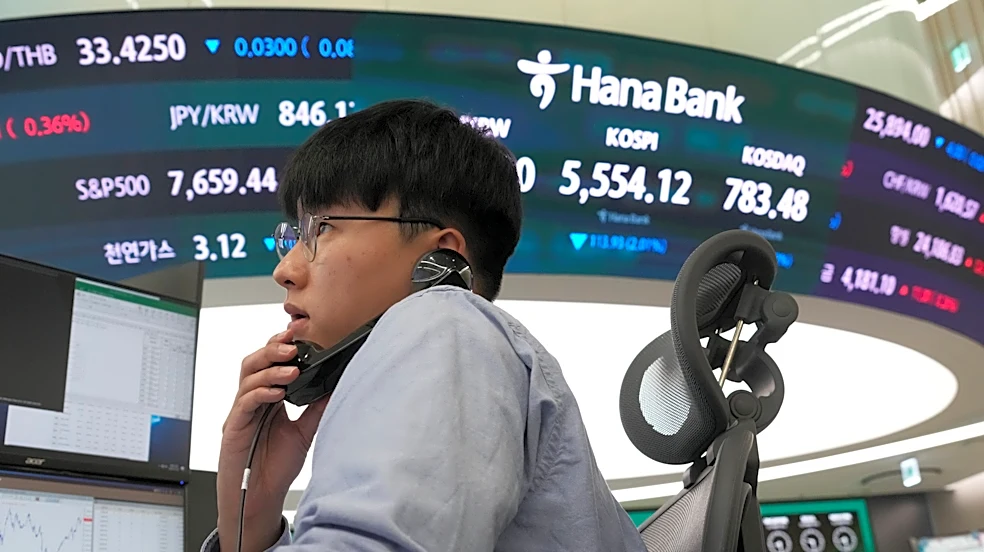
Elice, an artificial intelligence infrastructure firm, experienced a significant plunge in its stock value during its debut on South Korea’s tech-heavy secondary Kosdaq market. The company had raised just over $150 million through its Initial Public Offering
(IPO). Despite being a small-cap stock, the volatility observed in Elice's initial trading is being closely watched by market analysts, including CNBC's Steve Sedgwick, for potential signals regarding the broader market sentiment towards AI-related companies and new listings. The immediate downturn for Elice contrasts with the general excitement often associated with IPOs, particularly in high-growth sectors like artificial intelligence.
Why It's Important?
The sharp decline of Elice's stock on its IPO debut in South Korea carries implications for the global investment community, especially for those tracking the performance and investor appetite for AI-focused companies. While Elice is a South Korean entity, its performance can serve as a barometer for investor confidence in the AI infrastructure sector, which is a critical component of the broader technology landscape. A significant drop in an AI company's stock post-IPO could signal caution among investors, potentially influencing the valuation and reception of upcoming AI-related IPOs in other markets, including the U.S. It highlights the inherent risks and speculative nature of investing in new public offerings, even in highly anticipated sectors, and underscores the importance of fundamental analysis over market hype. This event could lead to increased scrutiny of AI company valuations and business models by investors worldwide.
What's Next?
The immediate aftermath for Elice will involve close monitoring of its stock performance and any statements from the company or market analysts regarding the reasons for the plunge. For the broader market, this event may prompt a re-evaluation of investment strategies for AI stocks, particularly those in the infrastructure segment. Future AI IPOs, both in South Korea and internationally, might face more cautious investor sentiment and potentially more conservative pricing. Companies considering going public in the AI sector may need to demonstrate stronger financial fundamentals and clearer paths to profitability to attract and retain investor confidence. This could also lead to a shift in focus from speculative growth to tangible value and sustainable business models within the AI industry.
Beyond the Headlines
Elice's IPO performance extends beyond a single company's stock trajectory, touching upon the broader narrative of the AI boom and its investment landscape. The rapid advancements in artificial intelligence have fueled significant investor enthusiasm, often leading to high valuations for companies in the sector. However, Elice's debut serves as a stark reminder that not all AI ventures will translate into immediate stock market success. This event could trigger a more discerning approach from investors, moving away from generalized excitement towards a more critical assessment of individual company strengths, competitive advantages, and realistic growth projections. It also highlights the potential for market corrections and the importance of due diligence in emerging technology sectors, where innovation often outpaces profitability. The long-term impact could be a more mature and sustainable investment environment for AI, where companies are judged more on their intrinsic value and less on speculative potential.