



What's Happening?
Bridgeport's East End has been designated as a Martin Luther King, Jr. Corridor, a state program aimed at promoting economic development and investment. This designation, which the East End received in the 1970s as Dr. Martin Luther King Jr. Boulevard,
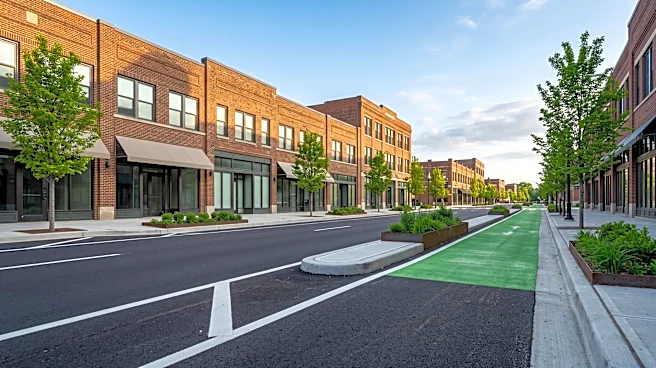
is now being leveraged to attract resources and attention to the neighborhood. The East End is one of seven such corridors in Connecticut, with others located in municipalities like Middletown, New Britain, and Norwalk. The program is designed to stimulate secured and unsecured lending and foster economic growth. Kelvin Ayala, an urban planner and economic development strategist with LBU & Associates, the lead local organization for Bridgeport's effort, stated that the designation provides an opportunity to focus resources on the neighborhood. The Connecticut Department of Banking indicates that this designation can also give grant applicants additional weight when seeking future state funding. The city is also working on complementary initiatives, such as a plan to convert Stratford Avenue to two-way traffic and redesign Connecticut Avenue to include a two-way protected bicycle track, addressing long-standing complaints from residents and businesses about one-way traffic limitations.
Why It's Important?
The Martin Luther King, Jr. Corridor designation is important for Bridgeport's East End as it provides a structured framework to attract much-needed investment and address historical economic disparities. The ability to gain additional weight in state grant applications could unlock significant funding for infrastructure improvements, business development, and community services. This initiative aims to transform the East End from a transit area into a destination, fostering a higher quality of life for residents and promoting neighborhood-based commerce. The focus on improving traffic flow on Stratford and Connecticut Avenues, coupled with efforts to bring essential services like grocery stores and banks, could significantly enhance the local economy and resident well-being. The program's success could serve as a model for other economically challenged urban areas in the U.S., demonstrating how strategic state designations can catalyze local revitalization efforts and empower communities to build wealth and improve their living conditions.
What's Next?
Bridgeport's East End will now focus on utilizing the Martin Luther King, Jr. Corridor designation to pursue investment and funding from various sources. LBU & Associates, the lead local organization, has divided the effort into three key areas: public art and beautification, small business and workforce development, and real estate investment and economic development. Specific ideas being explored include creating a pocket park near Stratford Avenue and Sixth Street, connecting residents with job opportunities, and providing technical assistance to entrepreneurs. There are also plans to redevelop vacant and blighted properties and pursue existing housing and property-improvement programs. The city's Office of Planning & Economic Development is working on converting Stratford Avenue to two-way traffic and redesigning Connecticut Avenue to include a two-way protected bicycle track. The success of these initiatives will depend on the ability to attract funding and move from conceptualization to implementation, requiring collaboration among state and local officials, community organizations, businesses, and residents.
Beyond the Headlines
The Martin Luther King, Jr. Corridor designation in Bridgeport's East End carries deeper implications beyond immediate economic development. It represents an effort to address historical inequities and foster a sense of community pride and self-sufficiency. The initiative aims to reverse decades of underinvestment and negative perceptions, building on the existing strengths and strong community bonds within the neighborhood. By focusing on local commerce, housing, and workforce development, the program seeks to create a sustainable middle class and ensure that residents can access essential services and opportunities close to home. The emphasis on collaborative work, as highlighted by Pastor Carl McCluster, suggests a shift towards community-led development that prioritizes the voices and needs of residents. This approach could lead to more equitable and resilient urban development, where economic growth is intertwined with social justice and community empowerment, potentially inspiring similar initiatives in other U.S. cities grappling with similar challenges.