







What's Happening?
German defense contractor Rheinmetall has revised its full-year guidance downwards for the second time since August, attributing the change to delays in military contracts and ammunition deliveries. The company now projects sales to reach approximately
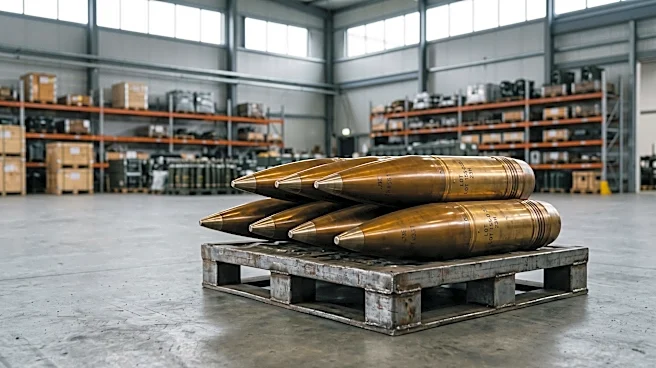
13.2 billion euros ($14.9 billion) in 2026, a reduction from its previous forecast of 13.7 billion to 14.2 billion euros. The expected operating margin has also been adjusted to around 18.5%, down from the earlier 19%. This marks the second such cut, with the first occurring in August after Germany canceled plans for warship construction, which would have been Rheinmetall's largest order since World War II. The specific reasons cited for the current revision include delays in the German military's Arminius Boxer project, now anticipated for commissioning next year, and setbacks in the acceptance testing of artillery ammunition.
Why It's Important?
Rheinmetall's revised outlook highlights significant challenges within the European defense industry, particularly concerning the timely execution of military contracts and procurement processes. The delays in major projects like the Arminius Boxer and issues with ammunition acceptance testing suggest potential bureaucratic hurdles or logistical complexities that can impede defense modernization efforts. This situation could impact the readiness and capabilities of the German military and potentially other European forces relying on Rheinmetall's products. For investors, the repeated guidance cuts signal instability and uncertainty in the defense sector, despite increased military spending across Europe. It also raises questions about the efficiency of defense procurement systems and the ability of defense contractors to meet demand, even in a heightened geopolitical climate. The company's stock performance, with shares down significantly year-to-date, reflects investor concerns about these operational challenges.
What's Next?
Rheinmetall will likely focus on resolving the delays in the Arminius Boxer project and addressing the issues with artillery ammunition acceptance testing to meet its revised targets. The commissioning of the Arminius Boxer project is now expected next year, which could provide some clarity on future revenue streams. The company will also need to manage investor expectations and demonstrate progress in overcoming these operational hurdles. The broader implications for the German military and other European defense clients include potential adjustments to their procurement timelines and strategic planning. The situation may also prompt a review of existing contract management and delivery processes within the defense sector to prevent similar delays in the future. Rheinmetall's performance in the coming quarters will be crucial in determining its ability to regain investor confidence and fulfill its role in European defense initiatives.
Beyond the Headlines
The challenges faced by Rheinmetall underscore a broader tension between increased defense spending and the practicalities of rapid military industrial expansion. While European governments are committing more funds to defense in response to geopolitical shifts, the industrial base may struggle with capacity, supply chain issues, and complex regulatory environments. This situation could lead to a re-evaluation of defense procurement strategies, potentially favoring more streamlined processes or greater standardization across NATO members to accelerate delivery. Furthermore, the delays highlight the intricate nature of modern defense contracts, which often involve advanced technology and rigorous testing protocols. The incident could also fuel debates about the balance between innovation and timely delivery in defense manufacturing, and whether current industrial capacities are sufficient to meet the urgent demands of contemporary security challenges.